 中文服务
中文服务







 6 Clinics Across London
 600,000 Treatments
 Free Consultation
 Award Winning Treatments
6 Clinics Across London
600,000 Treatments
Free Consultation
Award Winning Treatments
Award Winning Treatments
6 Clinics Across London
600,000 Treatments
Free Consultation
Award Winning Treatments
Rosacea is a chronic, inflammatory skin condition which principally affects the face, and causes skin redness.

Want to know more about these treatments?
Explore the treatment options available.
An innovative and gentle solution for rosacea lies in the use of laser or IPL (Intense Pulsed Light) treatments, such as the Lumenis M22 and Harmony XL IPL. These cutting-edge technologies carefully cauterise broken capillaries, effectively severing their blood supply without inflicting damage on the epidermis or adjacent tissues. As a result, these treated capillaries are naturally absorbed and eliminated by the body, leading to clearer, less inflamed skin.
This approach not only addresses the visible symptoms of rosacea but also promotes a healthier skin appearance. By reducing redness and swelling, IPL treatment provides relief and boosts confidence in individuals affected by this challenging condition. Moreover, it offers a non-invasive and effective way to manage rosacea, making it a popular choice for those seeking long-term solutions.
Rosacea is a chronic and perplexing skin condition primarily affecting the face. Rosacea treatment involves various strategies to manage symptoms, as its exact origins remain shrouded in mystery, though numerous triggers are known to exacerbate it. This condition is most noticeable by its telltale signs: superficial dilated capillaries that lead to persistent redness and swelling, particularly prevalent among those with fair skin.
What to look for
Here are the four recognised subtypes:
Erythematotelangiectatic Rosacea (ETR): This subtype features flushing, persistent redness, visible blood vessels, and skin sensitivity. It is often triggered by environmental factors like sun exposure and stress.
Papulopustular Rosacea: Resembling acne; this subtype presents with redness and breakout-like bumps. Flare-ups can be induced by stress and changes in climate.
Phymatous Rosacea: Characterised by skin thickening and a bumpy texture, this subtype typically affects the nose, leading to a condition known as rhinophyma. It progresses slowly and can worsen if rosacea remains untreated.
Ocular Rosacea: This subtype affects the eyes, causing redness, irritation, and swollen eyelids. Environmental elements like wind and sunlight can exacerbate its symptoms.
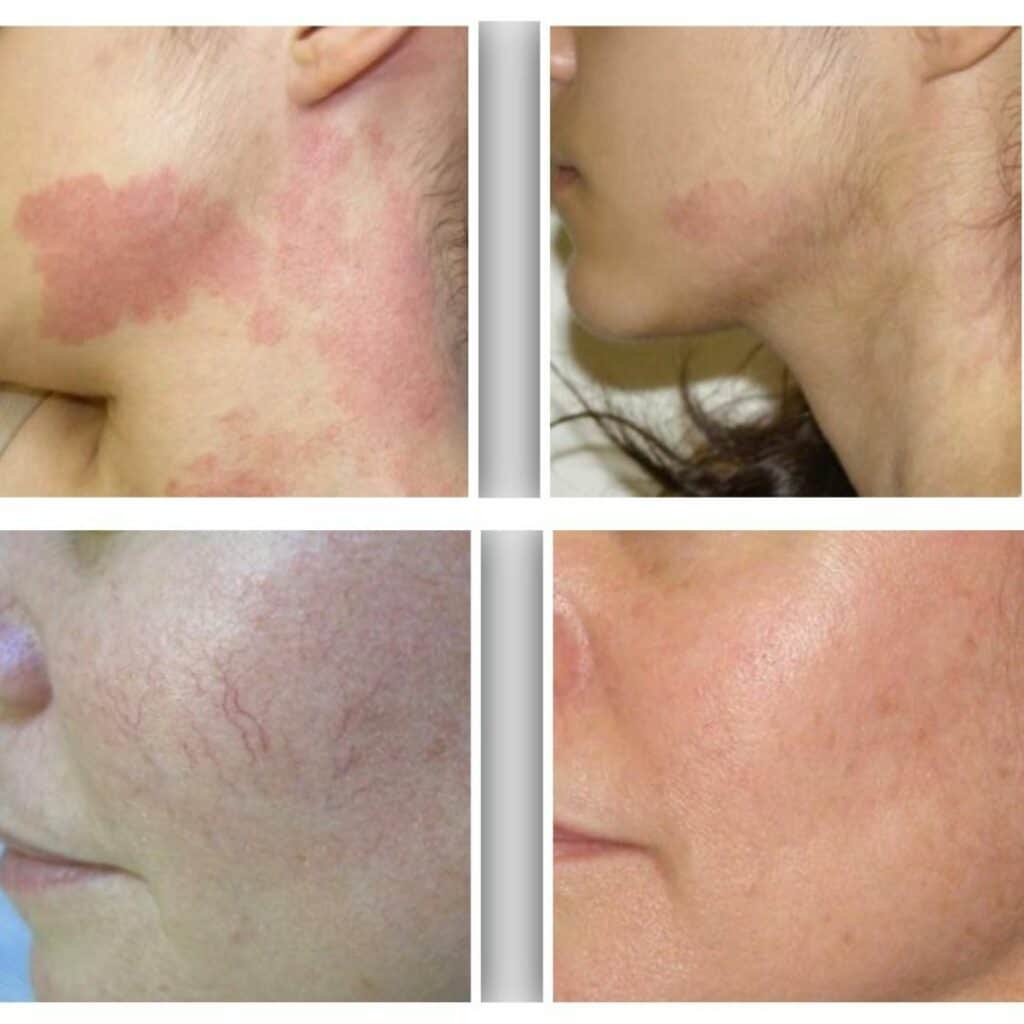
Results from our clinics
Real results from Premier Laser patients who completed a course of treatment. Individual results vary depending on the type and severity of the condition.


Treatment cost
Treatment is priced per session, with most patients needing a course of sessions for visible improvement. Prices for each recommended treatment are shown below.
Price: Original price was: £660.00.£330.00Current price is: £330.00.
Price: Original price was: £66.00.£59.40Current price is: £59.40.
What to expect afterwards
Rosacea is best managed with gentle, consistent aftercare:
Ready to start?
Speak with one of our clinicians at any of our six London clinics. We'll assess your skin, recommend the right approach, and give you a clear cost for your course.
Our clinics

 Back to Clinics
 In Clinic Consultation
 Telephone Consultation