 中文服务
中文服务







 6 Clinics Across London
 600,000 Treatments
 Free Consultation
 Award Winning Treatments
6 Clinics Across London
600,000 Treatments
Free Consultation
Award Winning Treatments
Award Winning Treatments
6 Clinics Across London
600,000 Treatments
Free Consultation
Award Winning Treatments
Sun exposure can leave lasting changes in your skin, including brown spots, uneven pigmentation, fine lines and a rougher texture. At Premier Laser & Skin Clinic in London, we offer treatments to improve the visible effects of sun damage, including IPL, pigment-targeting lasers, resurfacing and professional peels.

How we help
Sun damage can affect skin colour, texture and firmness. The most suitable treatment depends on your main concern, skin tone, medical history and recent sun exposure.
Before treating a brown mark, it is important to establish what it is. Any suspicious or unexplained skin changes need medical assessment before cosmetic treatment.
Stellar M22 IPL: Sun Spots and Redness
Stellar M22 IPL uses pulses of broad-spectrum light to target pigment and visible blood vessels. It may help reduce suitable sun spots, uneven colouring and redness.
IPL is a light treatment rather than a laser. Different filters and settings allow the practitioner to tailor treatment to the concern.
Treated brown spots may temporarily darken before fading or shedding. Suitability depends on your skin tone and tanning history, and a course may be recommended.
PicoSure Pro: Targeted Pigmentation Treatment
PicoSure Pro delivers very short laser pulses that target unwanted pigment. It may be recommended for suitable benign pigmented marks, including sun spots.
Treatment settings are selected according to the type of pigmentation and your skin. Some protocols also address texture and fine lines.
Results develop over time, and more than one session may be needed. Your practitioner will explain the expected response and any preparation or recovery requirements.
iPixel Laser Resurfacing: Texture and Fine Lines
iPixel laser resurfacing treats microscopic areas of the skin’s surface while leaving surrounding tissue intact. This supports skin renewal and collagen remodelling.
It may be considered when sun damage has affected skin texture and fine lines, alongside uneven tone.
Resurfacing requires a healing period. Redness, swelling and flaking can occur, and your practitioner will explain the likely recovery time for your treatment settings.
Mesopeel and Jessner Peels: Uneven Tone and Dullness
Professional Mesopeel and Jessner peels use chemical exfoliation to encourage skin renewal. A suitable peel may improve superficial pigmentation, dullness and uneven texture.
The formulation and strength are selected for your skin and concerns. A series of treatments may be recommended.
Peeling and sensitivity vary according to the peel used. Preparation, aftercare and sun protection are important parts of treatment.
Cosmelan: A Programme for Persistent Pigmentation
Cosmelan is a depigmentation programme that combines professional treatment with ongoing home care.
It may be considered for suitable areas of persistent or more widespread pigmentation. Its aim is to reduce the appearance of existing discolouration and help manage excess pigment production.
Cosmelan requires commitment to the recommended home-care routine and follow-up appointments. Redness, dryness and peeling can occur, and results depend partly on consistent aftercare and sun protection.
Understanding the condition
Sun damage develops through exposure to ultraviolet radiation from sunlight and sunbeds. Repeated exposure can affect pigmentation and damage the structures that help keep skin firm and smooth.
Over time, this may lead to uneven colour, fine lines, roughness and reduced elasticity. These visible ageing changes are often called photoageing.
Sun spots, also known as age spots or solar lentigines, commonly develop on exposed areas such as the face, hands, shoulders and chest. However, not every brown mark is a sun spot, so assessment matters before treatment
What to look for
Visible changes associated with sun exposure can include:
These changes can have other causes too. A skin assessment helps distinguish sun damage from concerns that need a different approach.
When Should I Have a Skin Change Checked?
Arrange a GP or dermatologist appointment if you notice a new or changing mark, a sore that does not heal, bleeding, or a persistent rough or scaly patch.
Some rough patches are actinic keratoses, which require medical assessment. Cosmetic pigmentation treatment should only proceed once concerning changes have been assessed.
Results from our clinics
Real results from Premier Laser patients who completed a course of treatment. Individual results vary depending on the type and severity of the condition.
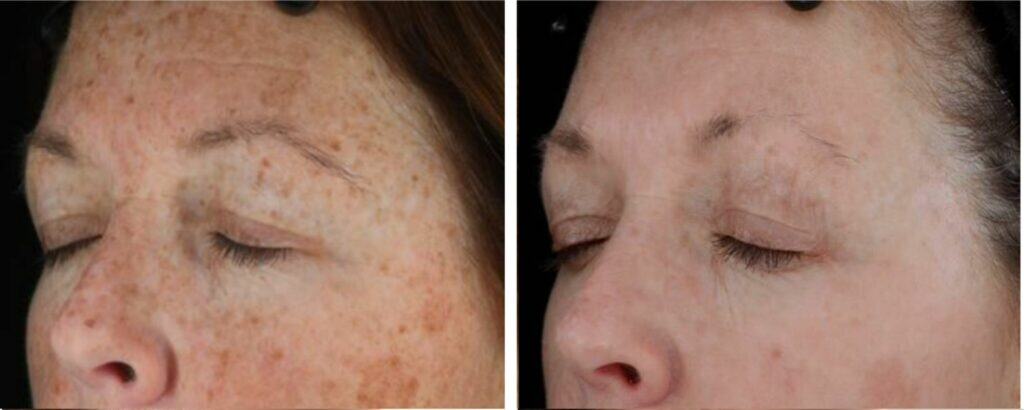
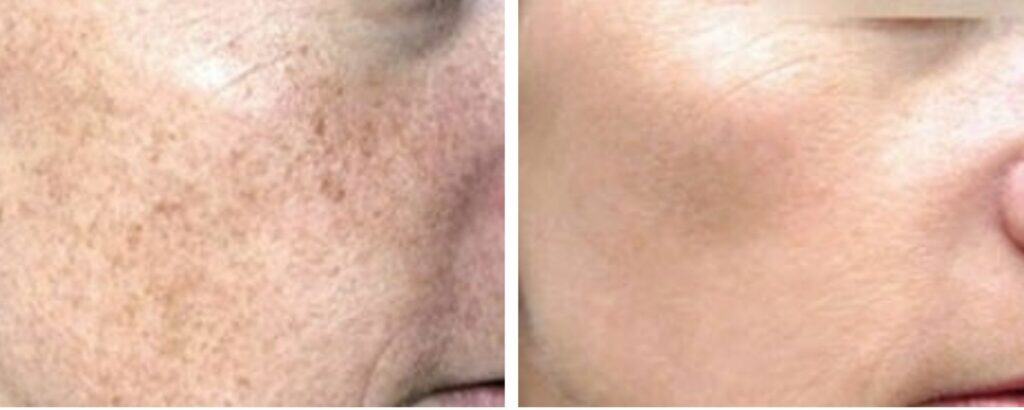
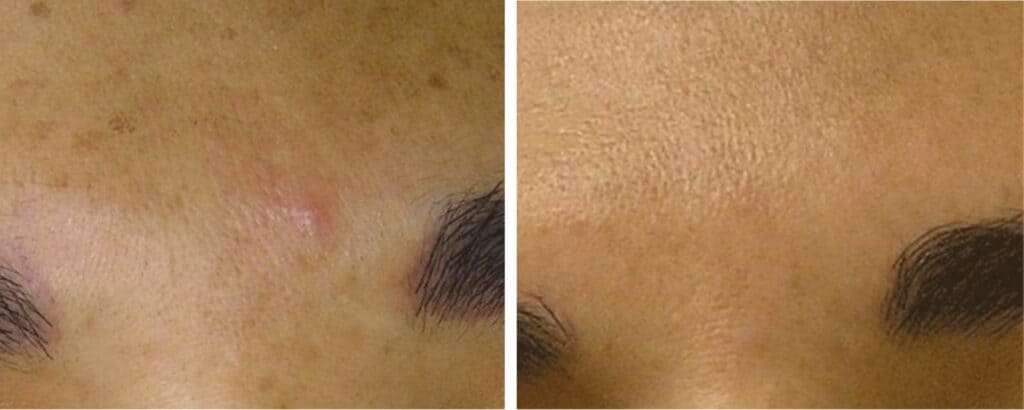
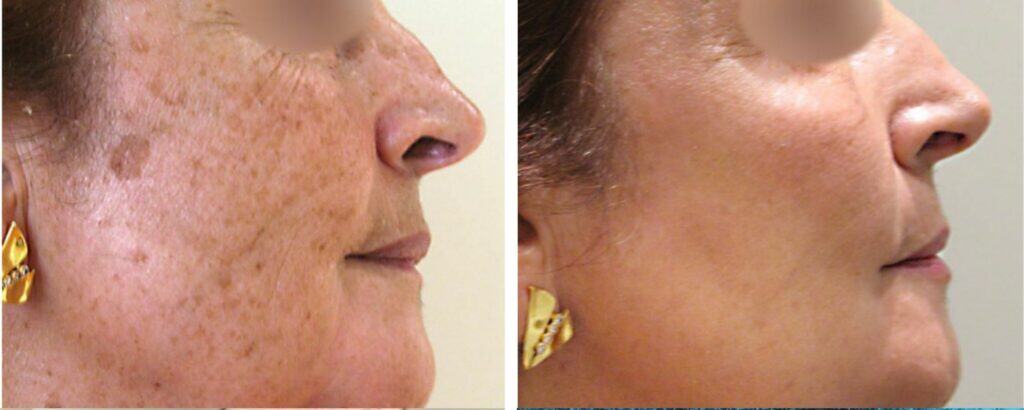
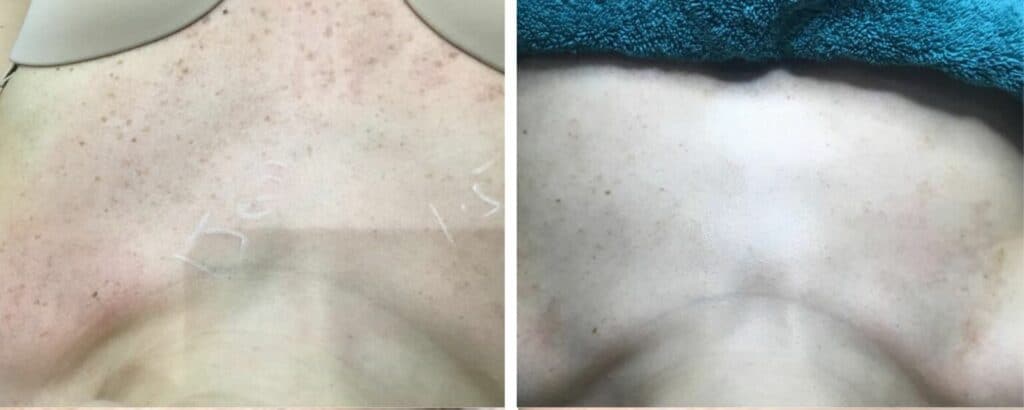
Treatment cost
Treatment is priced per session, with most patients needing a course of sessions for visible improvement. Prices for each recommended treatment are shown below.
Price: Original price was: £200.00.£180.00Current price is: £180.00.
Price: Original price was: £999.00.£899.00Current price is: £899.00.
Price: £0.00
Price: £100.00
What to expect afterwards
Aftercare varies between IPL, laser treatments and peels. Follow the instructions provided for your specific treatment.
Some pigment treatments cause temporary darkening before spots fade, while peels and resurfacing may cause visible flaking. Your practitioner will explain what to expect and when to contact the clinic.
Continue using shade, protective clothing and sunscreen after your skin has healed to help limit further sun damage.
Common concerns
Sun Spots and Uneven Skin Tone
Brown spots and patchy pigmentation can become more noticeable on areas regularly exposed to sunlight, including the face, chest and hands. Once the marks have been assessed, suitable IPL, laser or peel treatments may help improve their appearance and create a more even skin tone.
Fine Lines and Rough Skin Texture
Repeated sun exposure can contribute to premature lines, reduced elasticity and a rougher skin texture. Depending on your concerns, resurfacing or professional peels may help improve skin smoothness and the appearance of fine lines. Results and recovery vary with the treatment selected.
Redness and Visible Thread Veins
Sun exposure can contribute to persistent redness and small visible blood vessels, particularly across the face. Redness can also have other causes, including rosacea, so assessment is important. M22 IPL may be suitable for reducing certain superficial vessels and improving overall skin tone.
Frequently asked
The choice depends on the changes you want to address. IPL may suit certain sun spots and redness, while pigment-targeting lasers may be appropriate for individual benign marks. Resurfacing and peels can address texture and uneven tone.
Your skin tone, medical history and recent sun exposure also affect suitability.
Treatment can improve visible signs such as pigmentation, texture and fine lines. It cannot erase all previous UV damage or remove the need for sun protection and skin checks.
The aim is a realistic improvement in your skin’s appearance rather than a complete reversal of sun exposure.
No. Sun spots are individual marks associated with accumulated sun exposure. Melasma usually causes broader patches of pigmentation and can be influenced by hormones as well as sunlight.
They require different treatment plans, so identifying the type of pigmentation is an important first step.
Some individual spots may respond to a small number of sessions, while widespread pigmentation or texture concerns may need a course.
Cosmelan also involves ongoing home care. Your practitioner will explain the recommended plan and when to review your progress.
Treated spots may fade significantly, but pigmentation can recur and new spots can develop with further sun exposure.
Consistent sun protection helps maintain results. Some people may benefit from maintenance treatment or an ongoing skincare programme.
Treatment options may be available, but the device, settings or peel must be selected carefully. Skin tone and a history of pigmentation changes affect the risk of unwanted darkening or lightening.
No single treatment is suitable for everyone. Your practitioner will assess your skin and discuss appropriate options.
This depends on the treatment. Redness, swelling, sensitivity, temporary darkening and peeling can occur. Resurfacing and some peels require a more noticeable healing period.
Potential complications include burns, infection, scarring and changes in skin colour. Your practitioner will explain the risks and recovery associated with your proposed treatment.
Tell the clinic about recent tanning, sunburn and upcoming holidays. Laser, IPL or peel treatment may need to be postponed until your skin has recovered and any tan has faded.
Your practitioner will advise how long to avoid sun exposure before and after your chosen treatment.
As featured in







Ready to start?
Speak with one of our clinicians at any of our six London clinics. We'll assess your skin, recommend the right approach, and give you a clear cost for your course.
Our clinics

 Back to Clinics
 In Clinic Consultation
 Telephone Consultation