 中文服务
中文服务







 6 Clinics Across London
 600,000 Treatments
 Free Consultation
 Award Winning Treatments
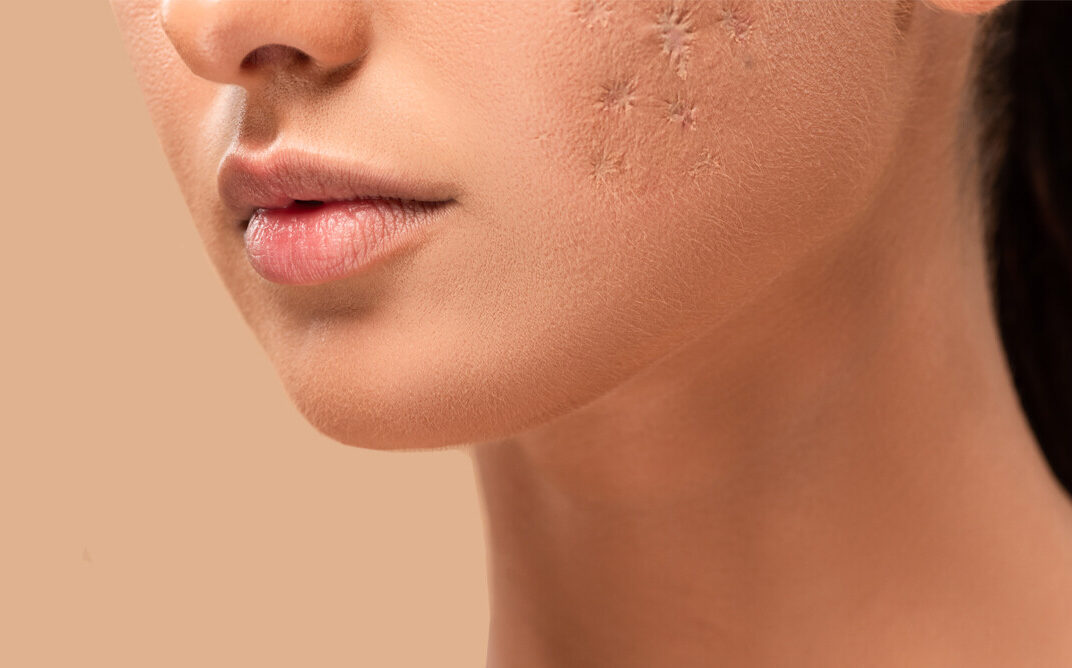
Scars can leave raised, indented or uneven areas of skin after an injury, operation or acne. At Premier Laser & Skin Clinic, we assess the type of scar before recommending treatment to improve its appearance.
How we help
Dermapen microneedling creates controlled punctures that stimulate skin repair. It may improve the texture of selected depressed or uneven scars. It is not the routine approach for a growing keloid.
Morpheus8 combines fine needles with radiofrequency energy to encourage collagen remodelling. It may be considered for suitable textural scars, with the settings chosen for the area and skin. This involves downtime and carries risks, including burns, pigment changes and scarring.
iPixel laser resurfacing is a fractional ablative treatment that removes tiny columns of skin. It may help selected scar textures as the area heals. Recovery and the risk of pigmentation changes need discussion beforehand.
Understanding the condition
What causes scarring?
A scar forms when the skin repairs damage by producing collagen. The depth of the original injury, its location, inflammation and your individual healing response influence the result.
Cuts, surgery, burns and inflammatory acne can all leave scars. Too little replacement tissue can produce an indentation, while an excessive healing response can create a raised scar. Keloids grow beyond the original wound. Stretch marks are another form of scarring associated with changes in the skin during stretching.
What to look for
What can scars look and feel like?
Scars may be flat, raised, sunken, firm or uneven. Their colour can differ from the surrounding skin, and some feel itchy, tender or tight.
A scar that limits movement needs medical assessment. Seek prompt medical advice if an area becomes increasingly painful, hot, swollen or starts producing discharge. These changes should be assessed before cosmetic treatment.
More about this condition
Understanding your scar before treatment
The first step is to establish what you want to improve: texture, depth, thickness, colour or discomfort. Your assessment also considers how long the scar has been present, whether the wound has healed, previous treatment and any history of keloids.
Scars can continue to change naturally over time. Treatment may soften their appearance, but the original skin cannot always be restored. Flat dark marks after inflammation may be hyperpigmentation rather than a change in skin structure. For more specific guidance, see our pages on acne scars and stretch marks.
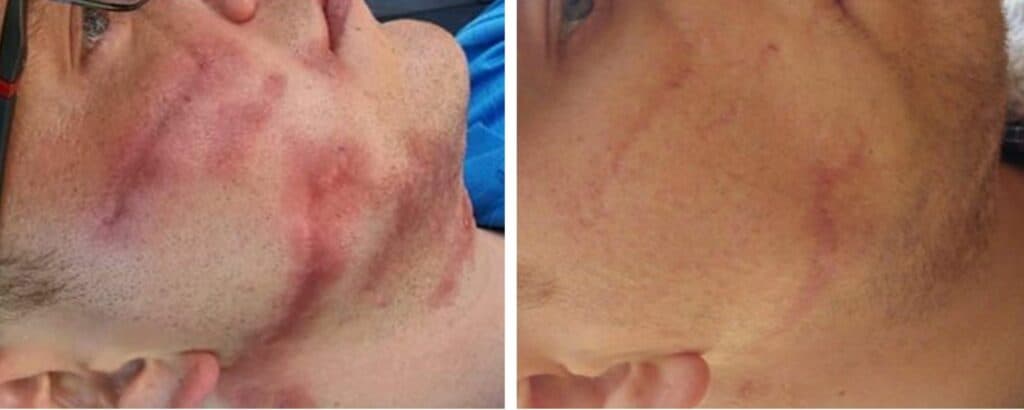
Results from our clinics
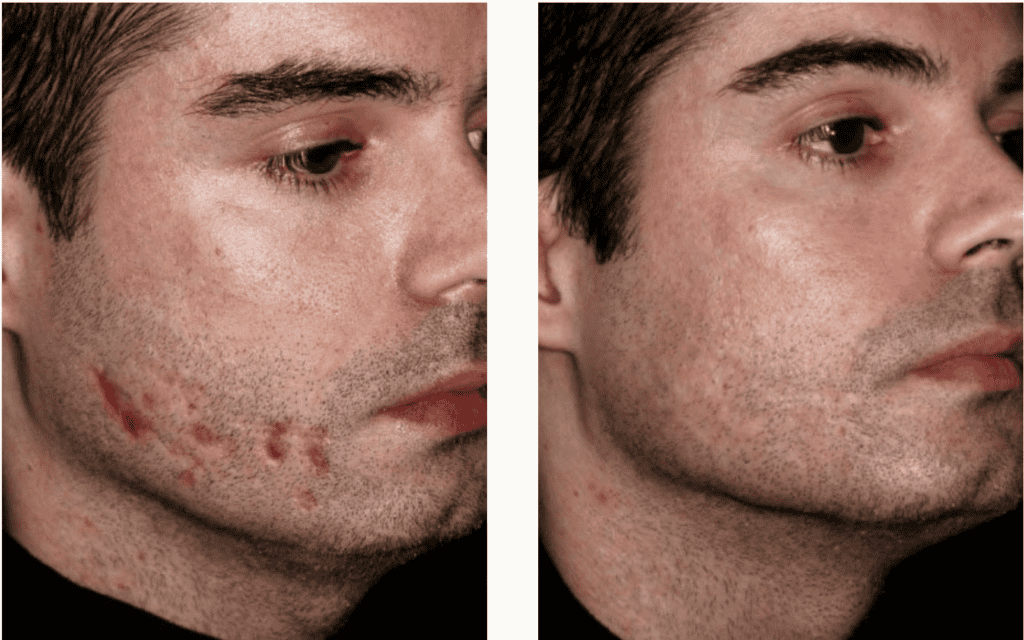
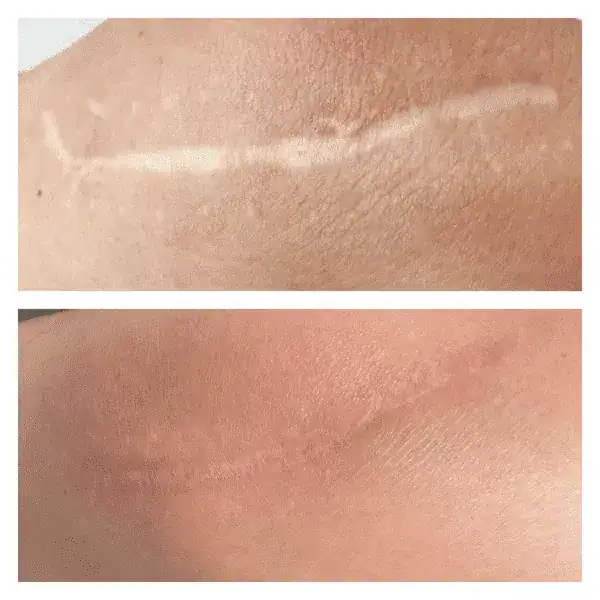
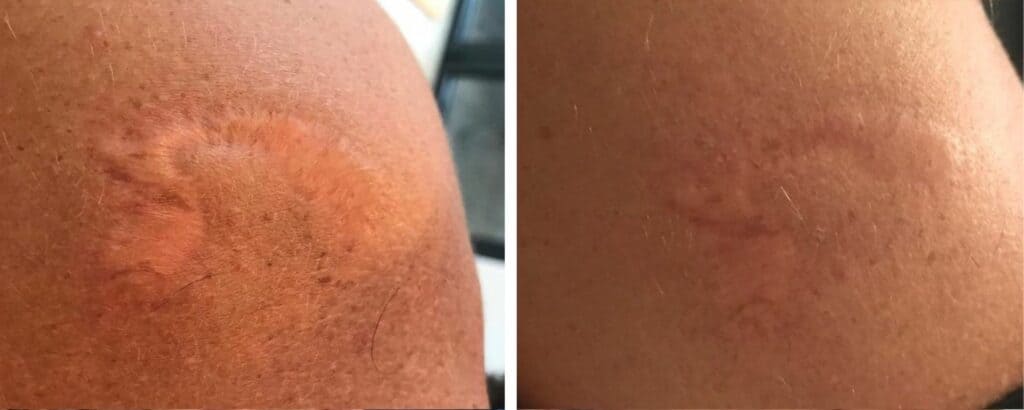
Real results from Premier Laser patients who completed a course of treatment. Individual results vary depending on the type and severity of the condition.

Treatment cost
Treatment is priced per session, with most patients needing a course of sessions for visible improvement. Prices for each recommended treatment are shown below.
Price: £100.00
Price: £349.00
From only £175.00 per session
From only £175.00 per session
Price: £200.00
Price: £349.00
Price: Original price was: £660.00.£495.00Current price is: £495.00.
What to expect afterwards
Aftercare following scar treatment
Follow the instructions for your particular procedure. Needling, laser treatment, injections and surgery have different healing requirements.
Keep the area clean, avoid picking and use only the recommended products during recovery. Protect it from the sun; apply sunscreen when your clinician confirms the surface has healed sufficiently. Ask when you can restart exercise, swimming, make-up and active skincare.
Common concerns
Depressions can create an uneven surface. Assessment identifies which textures may respond to collagen-stimulating treatment.
Hypertrophic scars and keloids need a different plan from depressed scars, often involving medical treatment.
A healed scar may remain wide, visible or uneven. Treatment depends on its position, maturity and structure.
Redness, darkening or restricted movement can need separate management. Cosmetic resurfacing is not the answer to every scar concern.
Frequently asked
No treatment can guarantee complete removal. The aim is to make a scar less noticeable or improve its texture, thickness or symptoms.
That depends on its type. Selected depressed scars may benefit from needling or resurfacing; raised scars may need a doctor’s assessment and a different approach.
Some established scars can improve with treatment. Their age alone does not determine suitability; depth, location, skin type and previous healing also matter.
Seek advice once you have concerns, but do not start cosmetic procedures on an unhealed wound. Timing should be agreed with your treating clinician or surgeon.
Potentially, but the risk of darker or lighter marks needs careful assessment. The procedure and settings must be appropriate for your skin and scar.
Some treatments involve a course, while a surgical plan is different. Your consultation should explain the proposed number, review points, recovery and total cost.
Doctor-led scar revision is listed at our Cannon Street clinic. The location for microneedling or laser treatment depends on the recommended procedure; our team will confirm this when booking.
As featured in







Ready to start?
Speak with one of our clinicians at any of our six London clinics. We'll assess your skin, recommend the right approach, and give you a clear cost for your course.
Our clinics

 Back to Clinics
 In Clinic Consultation
 Telephone Consultation