 中文服务
中文服务







 6 Clinics Across London
 600,000 Treatments
 Free Consultation
 Award Winning Treatments
Skin tags are small, soft, harmless skin growths that can catch on clothing or become a cosmetic concern. At Premier Laser & Skin, we offer CryoPen treatment for suitable skin tags. A consultation helps establish whether removal is appropriate and explains the treatment, costs and healing process.

How we help
Skin Tag Removal with CryoPen
CryoPen is a cryotherapy treatment that uses nitrous oxide to freeze selected benign skin growths. Applied directly to a suitable skin tag, the freezing process destroys the treated tissue, which gradually dries and separates as the area heals.
What Happens During Treatment?
Your practitioner assesses the area and discusses suitability, expected results and possible side effects before treatment. You may feel a cold, stinging sensation during freezing.
Afterwards, the treated skin tag may darken or develop a crust. It should be allowed to come away naturally. Some skin tags need further treatment following review.
Is CryoPen Suitable for My Skin Tag?
Suitability depends on the growth’s size, location and appearance, alongside your skin and medical history.
A growth that is changing, bleeding, painful or difficult to identify needs medical assessment before cosmetic removal. Where necessary, you will be advised to see your GP or a dermatologist.
Only available at Kingston & Fulham Clinic.
Understanding the condition
Skin tags, also called acrochordons, are benign growths. Their exact cause is not always clear, but they often develop where skin rubs against skin, including the neck, underarms and beneath the breasts.
They can become more common during pregnancy and in people with additional skin folds. Having a skin tag does not usually mean that treatment is needed.
What to look for
Skin tags are usually soft and may match your skin colour or appear darker. Many hang from the skin on a narrow stalk. They can occur individually or in groups.
Appearance alone cannot reliably identify every growth. If you are unsure what a mark is, or it changes, becomes painful or starts bleeding, arrange a medical assessment before considering removal.
More about this condition
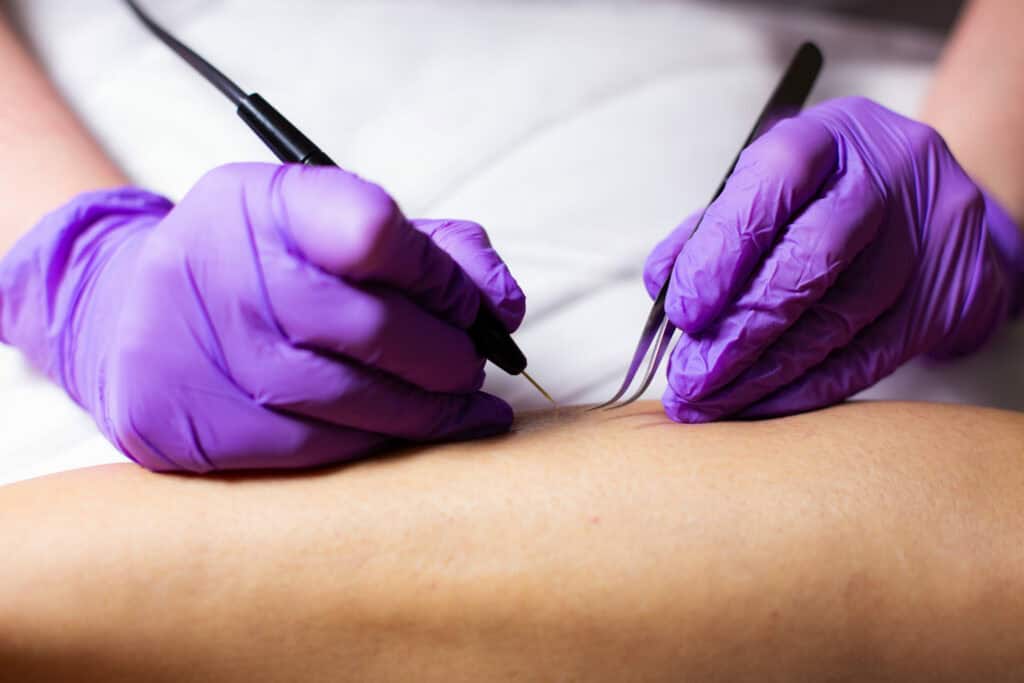
Skin tags can be removed safely with minimal scarring. There are both clinical and home treatments available to remove or stop such skin conditions.
The best thing to do is to book a consultation with a professional dermatologist or your family doctor (GP). They will be able to examine the skin tags to make sure that more serious skin problems do not exist. Sometimes moles, warts and skin cancer lesions can be wrongly diagnosed as skin tags, so it’s important to confirm what it is first.
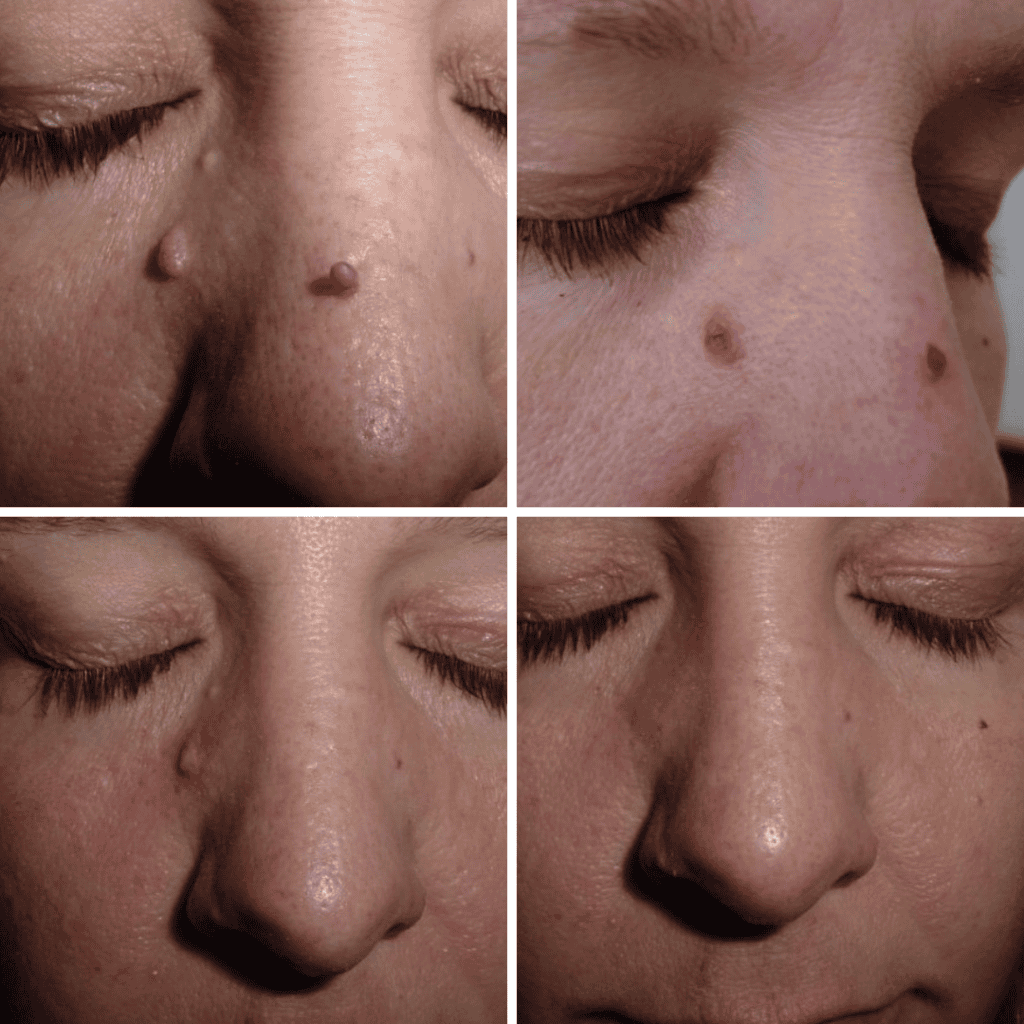
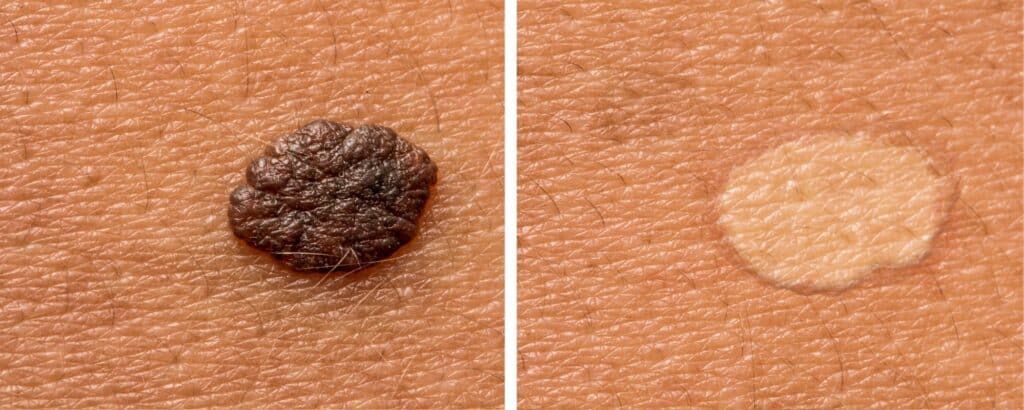
Results from our clinics
Real results from Premier Laser patients who completed a course of treatment. Individual results vary depending on the type and severity of the condition.
Treatment cost
Treatment is priced per session, with most patients needing a course of sessions for visible improvement. Prices for each recommended treatment are shown below.
Price: £169.00
What to expect afterwards
Follow the aftercare instructions provided by your practitioner. Temporary redness, tenderness, blistering or a crust can occur after freezing.
Healing varies. Contact the clinic or seek medical advice if pain increases, redness spreads or you notice discharge.
Common concerns
Skin Tags That Catch on Clothing
A skin tag may rub against a collar, necklace or bra strap, causing irritation. If it regularly catches or becomes uncomfortable, an assessment can help establish whether removal is appropriate.
Visible Skin Tags
Skin tags on exposed areas such as the neck can be a cosmetic concern. Removal is optional, and your consultation is an opportunity to discuss the expected appearance after healing and any risk of a lasting mark.
Unsure Whether It Is a Skin Tag?
Some other skin growths can resemble skin tags. Before treatment, it is important to establish what the growth is. An uncertain or changing lesion may need assessment by a GP or dermatologist.
Frequently asked
Confirmed skin tags are benign and usually do not need treatment. Removal may be considered if they cause irritation or their appearance bothers you.
You may feel cold, stinging or burning during treatment, followed by temporary tenderness. The sensation varies between people and treatment areas.
Some skin tags can be removed with one treatment, while others need another application after review. Your practitioner will explain what is realistic for your skin tag.
After freezing, the treated skin tag may darken and form a crust before separating naturally. Healing commonly takes around one to three weeks, although some areas take longer. The final appearance may take longer to settle.
Scarring and lighter or darker patches of skin are possible. Pigment changes can be more noticeable in darker skin tones and may persist. Your practitioner should discuss your individual risk before treatment.
A completely removed skin tag does not usually return. However, treatment does not prevent new skin tags developing elsewhere.
Do not cut, tie off or burn a skin growth yourself. Home removal can cause bleeding, infection or scarring, and the growth may not be a skin tag. Wart-removal products are not appropriate substitutes.
Growths close to the eye need careful assessment. Suitability depends on the exact location and diagnosis, and specialist referral may be needed. Do not assume that every eyelid growth is suitable for CryoPen.
As featured in







Ready to start?
Speak with one of our clinicians at any of our six London clinics. We'll assess your skin, recommend the right approach, and give you a clear cost for your course.
Our clinics

 Back to Clinics
 In Clinic Consultation
 Telephone Consultation