 中文服务
中文服务




 6 Clinics Across London
 600,000 Treatments
 Free Consultation
 Award Winning Treatments
6 Clinics Across London
600,000 Treatments
Free Consultation
Award Winning Treatments
Award Winning Treatments
6 Clinics Across London
600,000 Treatments
Free Consultation
Award Winning Treatments
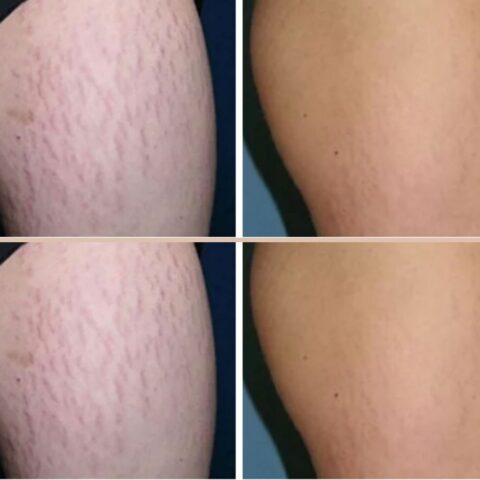
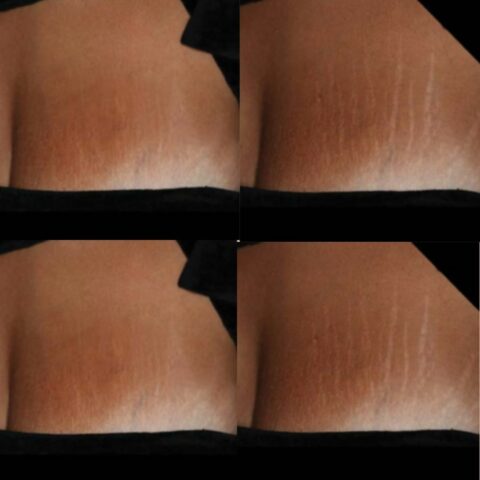
If you look in the mirror every day and wish something could be done about your stretch marks, it’s reassuring to know that today’s advanced technology can effectively address stretch mark removal.
Those wavy lines that crisscross your body, forming a distinct pattern on the skin’s surface, often compete with veins and arteries for attention. They typically develop when the skin stretches beyond its limits, leading to a loss of elasticity and disruption in collagen production. The combined loss of elastin and collagen results in the formation of stretch marks on the top layer of the skin.
Stretch marks can affect both men and women, commonly appearing on the thighs, hips, buttocks, and abdomens, especially during pregnancy. Factors such as rapid growth, hormonal changes, and fluctuations in weight can exacerbate their appearance.
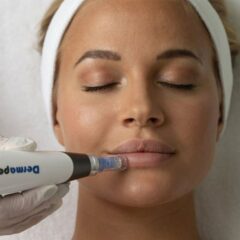
At Premier Laser & Skin Clinic in London, we offer a comprehensive range of treatments specifically designed to target and treat stretch marks. Our FDA-approved options include Dermapen microneedling, iPixel, RF Microneedling, and Morpheus 8, all of which are suitable for all skin types. These advanced treatments help restore your skin’s texture, reducing the visibility of stretch marks and leaving your skin looking smoother and more refined.
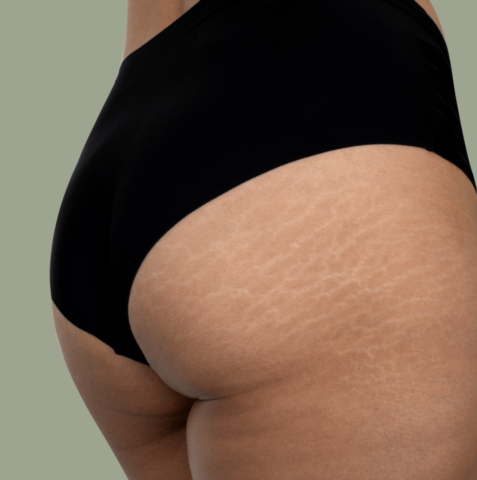
Some medications, like steroids, such as cortisone, can cause numerous stretch marks. Stretch marks are developed when the skin is excessively stretched beyond its limit during pregnancy, growth spurts or weight gain.
Collagen production in the dermis of the skin is damaged, and blood vessel dilation causes the development of purplish-coloured early stretch marks. The inflammation and collagen disruption may obscure the production of melanin. After a period, this lack of pigment leads to the white pigmented scars that we call stretch marks. It can also be caused by rapid weight gain in a short duration, such as puberty or during pregnancy.
Stretch marks can also be formed in children who have rapidly become obese or in teens or adolescents who have undergone growth spurts during puberty. Due to constant repetitive exercises, athletes and bodybuilders can also develop stretch marks. It has even been suggested that stretch marks are caused by an increased level of a hormone called glucocorticoids circulating through the body. The adrenal gland produces this hormone, and its production is increased during pregnancy, adolescence, obesity and weight lifting.
The glucocorticoids affect the dermis or the skin by preventing the fibroblasts from forming elastin fibres and collagen. These are required to keep the growing skin firm. What follows is dermal tearing, as there is a lack of supportive substance when the skin is being stretched over its limit. Some people can be more prone to getting stretch marks than others. Skin type may be a factor. For example, dryer skin has less elasticity than oily skin and is more likely to develop stretch marks. Stretch marks can also form more easily on the skin with a high proportion of cross-linked collagen that occurs in teenagers. Another hypothesis on the cause of stretch marks is that they can occur due to abnormal collagen formation as a result of chemicals that influence the formation of collagen. It is better to leave the stretch marks alone because they are harmless scars on the epidermis.
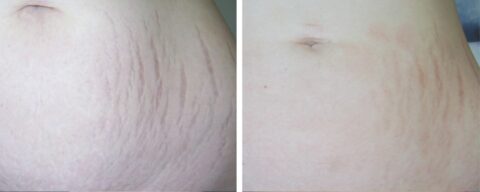
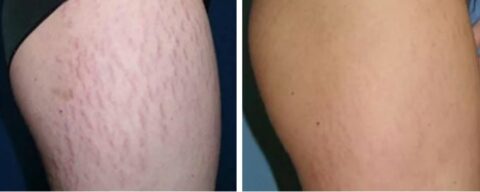
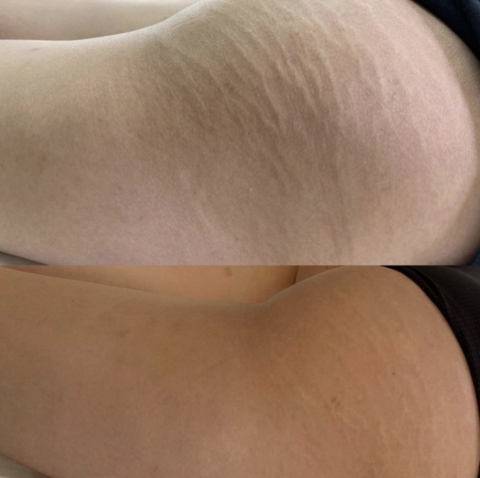
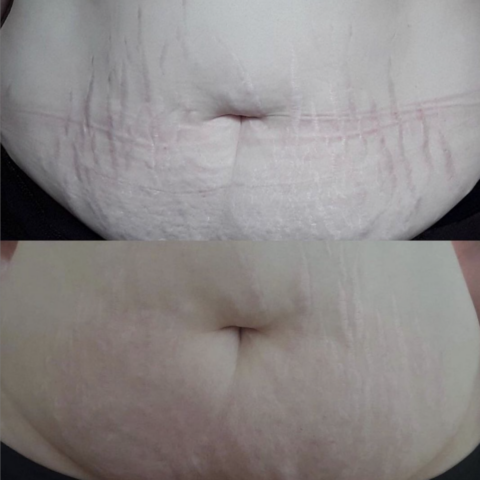
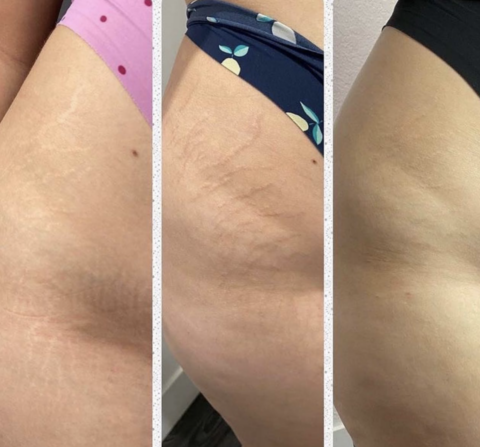
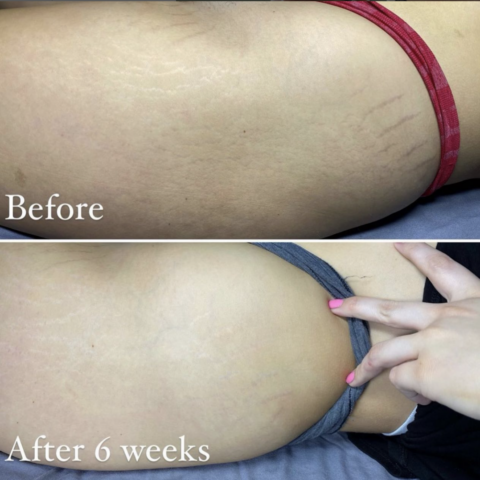


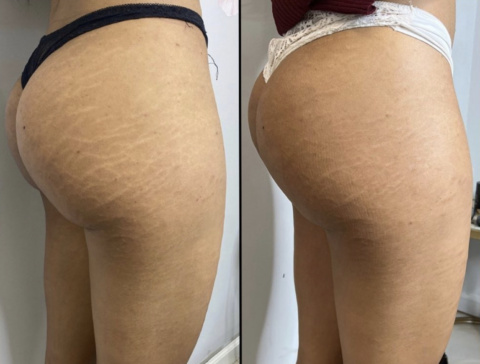
Our Skin experts are available across 6 clinics to assess your skin needs & goals and create a tailored plan suitable to your needs.



 Back to Clinics
 In Clinic Consultation
 Telephone Consultation