 中文服务
中文服务







 6 Clinics Across London
 600,000 Treatments
 Free Consultation
 Award Winning Treatments

At-home laser hair removal devices have become increasingly popular, promising convenient and cost-effective hair reduction from the comfort of home. While these devices can provide some level of hair reduction, many dermatologists still recommend professional laser treatments in clinics for safer, longer-lasting, and more effective results.
How Do At-Home Laser Hair Removal Devices Work?
Most at-home laser devices use Intense Pulsed Light (IPL) rather than true laser technology. IPL works by delivering broad-spectrum light to the hair follicles, whereas medical-grade lasers used in clinics emit a precise, single wavelength of light that penetrates deeper and is more effective at disabling hair growth.
Because at-home devices are designed for consumer use, they have lower energy levels compared to clinic-based lasers, meaning results tend to be slower, less permanent, and less effective on certain hair and skin types.
What Are the Risks and Side Effects of At-Home Laser Hair Removal?
While at-home laser devices are marketed as safe, improper use or unsuitable skin types can lead to unwanted side effects. Common risks include:
- Skin Burns and Blistering – Lower-energy IPL devices still generate heat, and if used incorrectly or on darker skin tones, they can cause burns and blisters.
- Hyperpigmentation or Hypopigmentation – People with darker skin tones are at greater risk of post-inflammatory hyperpigmentation (PIH), while lighter skin can develop patchy light spots (hypopigmentation) due to incorrect settings.
- Skin Sensitivity and Redness – At-home lasers can cause temporary redness and irritation, which may last longer than expected if the device is used too frequently or at a high intensity.
- Ineffectiveness on Certain Hair Types – Many at-home devices do not work well on blonde, grey, or very fine hair, leading to wasted time and money without visible results.
- Risk of Eye Damage – Without proper eye protection, the flash from at-home IPL devices can cause damage to the eyes, especially if used near the face.
Why Do Dermatologists Recommend Professional Laser Hair Removal?
Dermatologists and laser specialists generally favour professional laser hair removal London clinics over at-home devices due to the following reasons:
-
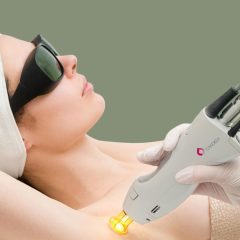
Stronger and More Effective Lasers – In-clinic treatments use medical-grade lasers, such as Alexandrite, Diode, and Nd:YAG, which provide greater precision and power, leading to faster and longer-lasting results.
-
Customised Treatment for Different Skin and Hair Types – Professional treatments can be tailored to different hair colours, skin tones, and body areas, whereas at-home devices often have limited settings that may not work well for darker skin tones or finer hairs.
-
Better Safety Measures – Incorrect use of at-home lasers can lead to burns, pigmentation issues, or ineffective results. In contrast, professional treatments are carried out by trained practitioners, ensuring safe and optimal results.
-
Faster Results – At-home devices require frequent use over many months, whereas professional laser treatments typically require just 6–8 sessions for significant hair reduction.
-
More Permanent Hair Reduction – While both at-home and professional treatments slow hair regrowth, in-clinic lasers provide more permanent results due to their ability to penetrate deeper into the hair follicle and fully disable it.
Are At-Home Devices Ever Recommended?
For those who want minor hair reduction or maintenance between professional treatments, at-home devices can be a convenient option. However, they are not a substitute for professional laser hair removal, especially for those with thick, dark, or stubborn hair.
At-home lasers may also not be suitable for darker skin tones, as they often lack advanced cooling technology and customisable settings, which in-clinic lasers provide to ensure safety and effectiveness.
Final Thoughts
While at-home laser hair removal devices can offer some level of hair reduction, dermatologists and skin specialists still recommend professional laser treatments for safer, faster, and more effective long-term results. Medical-grade lasers used in clinics are more powerful, customisable, and backed by expert care, making them the best choice for achieving smooth, hair-free skin with lasting results.
If you’re considering laser hair removal, consulting with our qualified practitioner ensures the treatment is tailored to your skin and hair type, maximising results while minimising risks.







 Back to All Treatments
 In Clinic Consultation
 Telephone Consultation