 中文服务
中文服务







 6 Clinics Across London
 600,000 Treatments
 Free Consultation
 Award Winning Treatments
Many suffer from stretch marks, and it can often feel like they appear overnight. They’re most common after pregnancy, severe weight gain, and even puberty, when the body can develop and grow particularly rapidly. 8 out of 10 women will have stretch marks after a pregnancy, and girls are more likely to get them during puberty than boys, so it’s women who get the brunt of it.
Understandably, many want to make them fade as much as much as possible, as they appear very noticeable and scar-like, but on top of this they often itch too. Commonly appearing on the stomach, thighs, upper arms and breasts, it can be a very noticeable problem and numerous treatments have been developed to combat them.
Why do stretch marks occur?
Stretch marks occur when the skin stretches in a short period of time and the dermis (the middle layer of skin) breaks as a result. The skin is made to stretch and grow as it needs to, but rapid growth can tear fibres and it begins to show on the outer layer of skin.
Blood vessels are burst when the skin fibres break, which is why many people’s stretch marks appear to be purple or red in colour.
Why do stretch marks itch so much?
Stretch marks can itch because the skin itself is dry or has developed a rash simultaneously. When we cut ourselves and it begins to heal, the raised skin is often dry and itchy – you can apply the same principle to stretch marks. On a positive note, it means your skin is clearly in the process of healing itself. Healing wounds itch because “nerve fibres can be activated by chemicals secreted by the body”, and too much tissue grows around the healing wound and hardens, which also irritates the skin.
A cooling cream or moisturiser will ease any dry skin and could soothe the itch temporarily, but it’s a necessary part of the healing process and shouldn’t irritate for too long.
How can you get rid of them?
There are numerous creams and oils on the market for stretch marks, and also various home remedies such as castor oil, aloe vera and egg whites. These only treat the outer layer of skin however, and the tears that cause stretch marks occur in the middle layer.
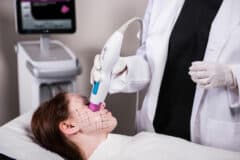
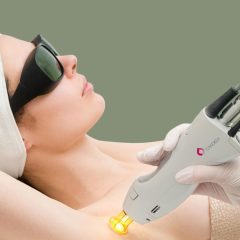
Laser treatments encourage deeper exfoliation, encourages the skin to regrow and rejuvenate,
Kim Kardashian underwent laser treatment last month to treat stretch marks from her pregnancy, as reported in the Mail online.
Stretch marks are an inevitability for many, and an unfortunate side effect of pregnancy. You can treat them though, laser treatments for stretch marks can make them look noticeably faded with a full set of three sessions. The better you are at understanding the cause of your stretch marks, the more informed you’ll be when it comes to removing them.
kim kardashian having pregnancy stretch marks treated with laser
To find out how we can help you and your stretch marks book your free consultation today



 Back to All Treatments
 In Clinic Consultation
 Telephone Consultation