 中文服务
中文服务







 6 Clinics Across London
 600,000 Treatments
 Free Consultation
 Award Winning Treatments

Crepey skin can be one of the most frustrating signs of ageing. It often appears thin, finely wrinkled and lacking elasticity, particularly around the neck, lower face, arms and abdomen. Unlike deeper sagging, crepey skin is more about texture and skin quality than excess tissue. This is why regenerative treatments are gaining attention, especially exosomes for crepey skin.
Rather than tightening aggressively or adding volume, exosomes focus on improving the skin’s internal repair processes. The result is gradual strengthening, better hydration and improved elasticity over time.
Why Crepey Skin Develops
As we age, collagen and elastin production slow significantly. Hormonal changes, UV exposure and weight fluctuations can accelerate this process. The skin becomes thinner and less resilient, leading to the crinkled texture associated with crepiness.
Traditional skincare products work primarily at the surface level. While they may improve hydration temporarily, they do not stimulate meaningful collagen regeneration in deeper layers.
What Are Exosomes?
Exosomes are microscopic extracellular vesicles that act as messengers between cells. In aesthetic medicine, they are used to enhance skin repair and stimulate collagen activity. In the UK, the products used in clinics are derived from plant sources, ensuring safety and regulatory compliance.
Their role is not to fill or freeze the skin like dermal fillers or anti-wrinkle injections do, but to encourage it to function more effectively at a cellular level.
How Exosomes Help Crepey Skin
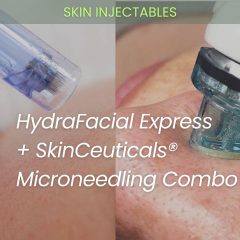
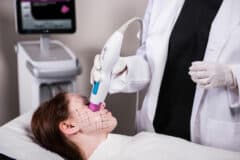
When combined with microneedling, exosomes penetrate deeper into the skin, where collagen and elastin fibres are produced. The microneedling process creates controlled micro-channels, allowing the exosomes to support regeneration more efficiently.
Over several weeks, the skin gradually becomes thicker, more hydrated and more elastic. Fine crepey lines soften, and the surface texture appears smoother. The change is progressive rather than dramatic, which makes the result look natural.
Unlike treatments that rely purely on tightening, exosomes address the underlying weakness in skin structure.
What Areas Can Be Treated?
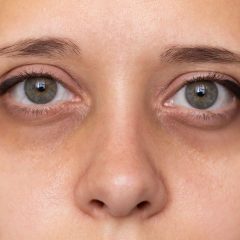
Exosomes are commonly used on delicate areas such as the neck and under-eye region, where crepey skin is particularly noticeable. They can also improve texture on the arms, abdomen and other areas affected by ageing or weight loss.
Because the treatment supports regeneration rather than aggressive resurfacing, downtime is typically minimal.
How Long Do Results Take?
Results develop gradually over several weeks as collagen production increases. Most individuals benefit from a course of treatments spaced appropriately to maximise regeneration. Maintenance sessions may be recommended depending on age and skin quality.
The goal is not an artificial lift, but healthier, stronger skin.
A Modern Solution for Skin Quality
For those seeking non-surgical options, exosomes for crepey skin provide a regenerative approach that focuses on long-term improvement rather than temporary tightening. By enhancing the skin’s ability to repair itself, exosomes can significantly improve texture and elasticity in a natural way.



 Back to All Treatments
 In Clinic Consultation
 Telephone Consultation