 中文服务
中文服务







 6 Clinics Across London
 600,000 Treatments
 Free Consultation
 Award Winning Treatments
How can I get rid of my tattoos? This cry for help is heard with increasing regularity in doctor’s offices across the world as tattoos have become more and more mainstream over recent years. Pre 1980, tattoos were strictly seen only on sailors, bikers and punks…other people sporting them were a very unusual sight.
Then came their popularisation in the 90s thanks largely to fashionable celebrities, rock stars and sports stars who made almost a hobby out of collecting tattoos by the most famous artists across the globe. Hollywood A-listers were seen with them and suddenly it wasn’t taboo…ordinary people everywhere were getting Chinese lettering, the names of their families, portraits and full back pieces which cost hundreds of pounds.
But people grow up…they get jobs, get married and begin careers which aren’t always sympathetic towards body art. Then there’s the issue of some women who want to look elegant in formal wear…not so easy when your shoulders are inked!
Below are some of the main methods used by people to remove their tattoos.
Salabrasion: This technique is very old and is basically the practice of stripping away upper layers of skin using an abrasive salt and water mixture. If it sounds rough that’s because it is! Salabrasion can cause serious scarring and isn’t a great solution for professional tattoos which may reach down deep into the lower skin layers.
Dermabrasion: This is a “sanding” method similar to salabrasion but without the salt. Practitioners basically use a special, coarse rotating brush to rub and grind away the upper layers of skin. It is painful and can’t be used if you suffer from bleeding disorders or Keloid scars. Dermabrasion isn’t always successful due to the fact that it can’t reach down to the lower layers and it also produces scars.
Excision: This is the technique of literally cutting out the area of skin with the tattoo on it. It is carried out under anaesthetic and the surgeon removes the upper layers of skin with a scalpel and then removes the ink resting within. The skin is then replaced and scarring is 100% likely. With larger areas, the original skin is not always replaceable and then a skin graft is necessary. This is an invasive and painful procedure with quite complex after-care involved.
Cryosurgery: This method is usually used to freeze off warts and other small imperfections on skin but it is also used in conjunction with dermabrasion at times. The skin with the tattoo present is exposed to extremely cold temperatures which “harden” the skin making it easier for the practitioner to “sand” off the layers of skin with ink in them. It is not always successful, can result in scarring and some colours such as yellow and green do not respond well to it.
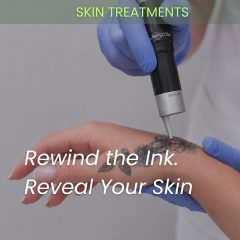
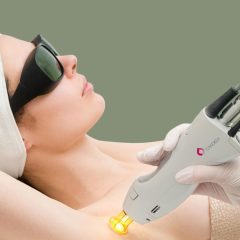
Laser Tattoo Removal: This is by far the most successful method for tattoo removal being both safe and very effective. Lasers are precise and able to target only the area with the tattoo ink present within it…leaving the surrounding skin unaffected. Laser tattoo removal is highly effective on most ink colours and is generally suitable for all skin types. Even sensitive skin can be treated with excellent results. There is no aggressive removal of skin layers, rather the ink molecules are destroyed as they lie within the skin and then absorbed naturally by the body and expelled naturally too.
If you’re suffering from regret surrounding your body art don’t leave it a moment longer, with the technology available today you no longer need to put up with your unwanted tattoos.


 Back to All Treatments
 In Clinic Consultation
 Telephone Consultation