

Why Do You Wear Glasses During Laser Hair Removal? - London Premier Laser & Skin Clinic Book Free Consultation
Location Icon 6 Clinics Across London Users Icon 600,000 Treatments Phone Icon Free Consultation Awards Icon Award Winning Treatments

Why Do You Wear Glasses During Laser Hair Removal?

By Mary Basiadima, 16 January 2025

Why Do You Wear Glasses During Laser Hair Removal?

If you’ve ever undergone laser hair removal London treatments, you’ll know that wearing protective glasses is a standard part of the procedure. It might seem curious at first—after all, the laser isn’t targeting your eyes, so why do you wear glasses during laser hair removal and is it necessary? Let’s explore the science behind it

Understanding the Laser Technology

Laser hair removal uses highly concentrated beams of light to target hair follicles. These lasers work by emitting specific wavelengths of light that are absorbed by the pigment (melanin) in the hair. This energy converts into heat, effectively damaging the follicle to inhibit future hair growth.

While this technology is incredibly effective for hair removal, the powerful light emitted by the laser can pose risks to your eyes if proper precautions aren’t taken. Even indirect exposure to the laser light can be harmful, making protective eyewear a non-negotiable part of the process.

Why Do You Wear Glasses During Laser Hair Removal?

  1. Protecting Your Vision:
    The light emitted by laser devices is extremely intense and operates at specific wavelengths that can damage sensitive eye tissues. Direct or scattered laser beams can potentially harm the retina, leading to temporary or even permanent vision issues.
  2. Shielding Against Scattered Light:
    Even if the laser isn’t aimed near your face, light can reflect off surfaces in the treatment room. Protective glasses ensure your eyes are safe from any scattered laser energy during the session.
  3. Ensuring Comfort:
    Some lasers emit bright flashes of light during the procedure, which can be startling or uncomfortable for the eyes. The tinted protective glasses reduce glare, making the experience more comfortable for you.

How Do the Glasses Work?

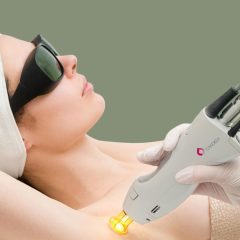
The glasses or goggles provided during laser hair removal are specifically designed to block the wavelength of light used in the procedure. They’re not just ordinary sunglasses—each pair is tailored to the type of laser being used, whether it’s an Alexandrite, Nd:YAG, or diode laser. This ensures maximum protection for your eyes.

Can You Skip the Glasses?

In the UK absolutely not. Our clinics will always prioritise safety, and wearing protective eyewear is a standard protocol. If a practitioner doesn’t offer glasses or suggests they’re unnecessary, it’s a major red flag, and you should consider seeking treatment elsewhere.

A Safer, More Comfortable Experience

Wearing glasses during laser hair removal might feel like a small detail, but it plays a significant role in ensuring a safe and effective procedure. So, the next time you’re handed a pair of tinted goggles before your session, you can put them on with confidence, knowing they’re there to protect your vision and enhance your comfort.
FAQs

Can I Just Close My Eyes During Laser Hair Removal?

No, closing your eyes is not enough to protect them during laser hair removal. The laser emits intense light that can harm the eyes even if they are closed, as the eyelids alone cannot block the energy or prevent scattered light from reaching sensitive eye tissues. This is why clinics always provide specialised protective goggles designed to shield your eyes from the laser’s wavelength, ensuring complete safety during the procedure.

Can Your Eyes Be Too Bad for Laser?

If you’re considering laser treatment for vision correction, the suitability of your eyes depends on several factors, including the condition of your vision, corneal thickness, and any underlying eye health issues. People with extremely high prescriptions, thin corneas, or certain eye diseases (like keratoconus or severe dry eye) may not be ideal candidates for laser eye surgery. It’s essential to undergo a comprehensive eye examination with an experienced ophthalmologist to determine if laser treatment is a safe and effective option for you.

Can Laser Trigger a Migraine?

Laser treatments, including laser hair removal, can occasionally trigger migraines in people who are sensitive to bright lights or flashes. The intense light emitted by the laser, particularly if it reflects or creates glare, might act as a stimulus for those prone to migraines. To minimise the risk, protective goggles are worn during the procedure to reduce exposure to the light. If you’re migraine-prone, it’s a good idea to inform your practitioner so they can take extra precautions to ensure your comfort.

Popular Categories

Skin Treatments

Special Offers

DR Skincare

Related Articles

Real Acne Treatment Results: What to Expect in 3 Months

Real Acne Treatment Results: What to Expect in 3 Months

Seeing real improvement in acne takes time — and for most people, noticeable results begin to appear within 8 to 12 weeks of consistent treatment. Whether you’re starting a clinical skincare plan or a professional treatment programme, understanding what to expect helps you stay consistent and avoid early frustration. Month 1: Skin Adjustment Phase In…

Most Googled Questions About Skin Cancer — Answered

Most Googled Questions About Skin Cancer — Answered

Skin cancer is one of the most common forms of cancer worldwide, yet many people are still unsure about what it looks like, who is at risk, and when they should seek medical advice. During Skin Cancer Awareness Month, we’re answering some of the most frequently searched questions about skin cancer to help you stay…

Post-Pregnancy & Menopause Belly Fat: Why It’s Hard to Lose and What Actually Works

Post-Pregnancy & Menopause Belly Fat: Why It’s Hard to Lose and What Actually Works

For many women, there comes a point where diet and exercise suddenly stop delivering the results they used to. You might be eating well, staying active, doing everything “right” — yet stubborn belly fat simply refuses to shift. This is especially common after pregnancy and during menopause. And it can be frustrating, not just physically,…

What is the best anti-aging treatments for 30s, 40s and 50s

What is the best anti-aging treatments for 30s, 40s and 50s

Ageing is a natural process, but how we delay and optimise skin ageing can make a significant difference to how we look and feel over time. At Premier Laser & Skin Clinics, we believe anti-ageing isn’t about changing your face, it’s about maintaining healthy, radiant, confident skin at every stage of life using the latest…

Template: single.php
0