 中文服务
中文服务







 6 Clinics Across London
 600,000 Treatments
 Free Consultation
 Award Winning Treatments

Razor bumps are a frustrating and often painful problem, particularly in areas such as the bikini line, underarms, face and neck. They can appear as small red spots, inflamed bumps or even dark marks left behind after shaving. Many people try exfoliators, soothing creams and different razors, only to find the problem keeps returning. This leads to a common question: what is the best treatment for razor bumps UK residents can rely on long-term?
To answer that properly, it’s important to understand why razor bumps develop in the first place.
Why Razor Bumps Keep Coming Back
Razor bumps, medically known as pseudofolliculitis, occur when shaved hairs curl back into the skin instead of growing outward. This triggers inflammation, redness and sometimes infection. The problem is more common in individuals with coarse, curly or thick hair, but it can affect anyone who shaves regularly.
The more frequently you shave, the higher the chance of ingrown hairs forming. Over time, repeated irritation can also cause pigmentation and scarring, particularly on the neck or bikini area.
Why Topical Products Often Don’t Solve the Problem
While exfoliating acids and anti-inflammatory creams can help calm active bumps, they rarely prevent the root cause. As long as hair continues to regrow and be shaved, the cycle repeats. Many people find themselves trapped in a routine of shaving, irritation, healing and then starting again.
This is why effective long-term treatment focuses on reducing hair growth rather than just treating surface inflammation.
Laser Hair Removal as a Long-Term Solution
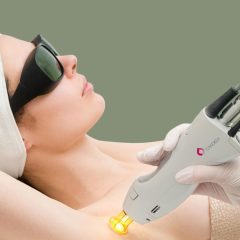
For many clients in the UK, laser hair removal is considered the most effective long-term treatment for razor bumps. By targeting the hair follicle and reducing regrowth, laser treatment minimises the chance of hair curling back into the skin.
As hair becomes finer and grows back more slowly, inflammation decreases significantly. Over time, the skin becomes smoother, with fewer bumps and less pigmentation from repeated irritation.
Laser hair removal is particularly beneficial for areas prone to chronic ingrowns, such as the beard line in men or the bikini area in women.
When Pigmentation Is Already Present
If razor bumps have left behind dark marks, additional treatments may be recommended to improve skin tone. Once active ingrown hairs are under control, pigmentation can be addressed safely with appropriate skin treatments tailored to your skin type.
Treating both the cause and the after-effects is key to achieving clear, even skin.
Is It Safe for All Skin Types?
Modern laser systems used in regulated UK clinics can be adjusted for different skin tones. A consultation with our practitioners is essential to assess hair colour, skin type and any history of pigmentation issues. When performed correctly, laser hair removal London treatments are a safe and effective option for most individuals struggling with recurring razor bumps.
A Long-Term Approach to Smooth Skin
So when considering the best treatment for razor bumps UK, the most effective solution is one that addresses the root cause, repeated shaving and trapped hairs. Reducing hair growth through laser hair removal men treatments significantly lowers inflammation and helps restore smoother, healthier-looking skin.





 Back to All Treatments
 In Clinic Consultation
 Telephone Consultation