 中文服务
中文服务







 6 Clinics Across London
 600,000 Treatments
 Free Consultation
 Award Winning Treatments

In recent years, laser technology has significantly advanced, offering a variety of treatments for skin and hair-related issues. Among these, laser hair removal has gained widespread popularity for its efficacy in providing long-term hair reduction. However, a question often arises: Can laser hair removal treat spider veins? To answer this, it is essential to understand the differences between these two concerns and the specific laser technologies designed to address them.
Understanding Spider Veins
Spider veins, medically known as telangiectasias, are small, dilated blood vessels that appear close to the surface of the skin. They typically manifest as red, blue, or purple lines, resembling spider webs, hence the name. Spider veins commonly occur on the legs and face and can be caused by various factors including genetics, prolonged standing, hormonal changes, and sun exposure.
While spider veins are usually harmless, they can be a cosmetic concern for many individuals. Treatments for spider veins range from lifestyle changes and compression stockings to more advanced medical procedures like sclerotherapy and laser therapy.
Laser Hair Removal: A Different Purpose
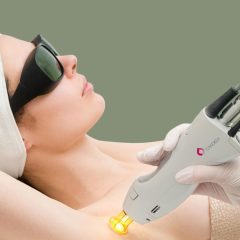
Laser hair removal works by targeting the pigment (melanin) in hair follicles. The laser emits a concentrated beam of light, which is absorbed by the melanin, heating up and damaging the follicle to inhibit future hair growth. This treatment is specifically designed to affect hair follicles and is highly effective for reducing unwanted hair on various parts of the body.
Laser Treatment for Spider Veins
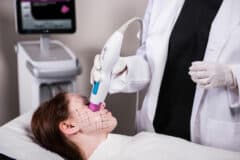
The treatment of spider veins with lasers involves a different approach compared to laser hair removal. Specialised vascular lasers, such as the Nd laser, are used for this purpose. These lasers emit light that is absorbed by the blood vessels rather than the pigment in hair follicles. The heat generated by the laser causes the blood in the targeted veins to coagulate, eventually leading to the collapse and absorption of the vessel by the body.
Can Laser Hair Removal Treat Spider Veins?
Given the distinct mechanisms by which these treatments work, it is clear that laser hair removal is not suitable for spider vein treatment. The lasers used for hair removal are not designed to target blood vessels and, therefore, will not effectively treat spider veins. Attempting to use hair removal lasers on spider veins could lead to suboptimal results and potential skin damage.
Appropriate Treatments for Spider Veins
For individuals seeking to address spider veins, consulting a dermatologist or vascular specialist is crucial. They can recommend appropriate treatments based on the severity and location of the spider veins. Common laser treatments for spider veins include:
- Intense Pulsed Light (IPL): Although not a laser, IPL uses broad-spectrum light to target and reduce the appearance of spider veins.
- Pulsed Dye Laser (PDL): This laser emits a concentrated beam of light that is absorbed by the blood vessels, causing them to collapse and fade.
- Nd Laser: This laser penetrates deeper into the skin, making it effective for treating larger spider veins.
Combining Treatments
In some cases, a combination of treatments may be necessary to achieve the desired results. For example, a patient might undergo sclerotherapy, where a solution is injected into the vein to collapse it, followed by laser therapy to refine the results. Each treatment plan should be tailored to the individual’s needs and skin type.
In conclusion, to address the question: Can Laser Hair Removal Treat Spider Veins? While laser hair removal and spider vein treatment both utilise laser technology, they are fundamentally different procedures designed to address distinct issues. Laser hair removal London treatment is highly effective for long-term hair reduction but is not suitable for treating spider veins. Those concerned about spider veins should book a free consultation with our practitioners, who can provide specialised treatments designed to target and reduce the appearance of these vascular lesions. By understanding the appropriate uses of laser technology, patients can achieve optimal outcomes for their specific cosmetic concerns.






 Back to All Treatments
 In Clinic Consultation
 Telephone Consultation