 中文服务
中文服务







 6 Clinics Across London
 600,000 Treatments
 Free Consultation
 Award Winning Treatments
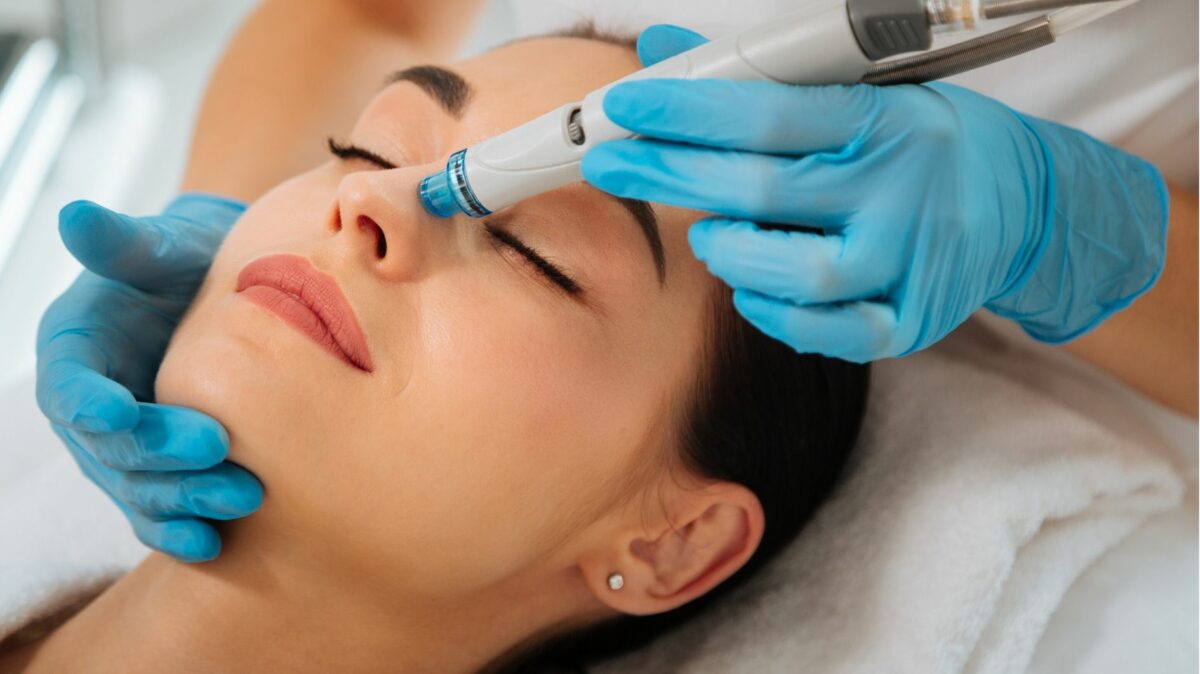
Should you rush back to get a Hydrafacial once the lockdown is over?, or are you at risk from Coronavirus?.
Hydrafacial is one of the UKs most popular facial treatments, so it’s a question many will ask as clinics start opening.
Hydrafacial UK have issued their own guidelines which we’ll cover in this blog.
Hydrafacials globally
Hydrafacial operates globally, so their guidelines have been issued worldwide. Clinics and salons in countries where Covid-19 restrictions have been eased, and are ahead of the UK, are already safely performing Hydrafacials following their guidelines.
Hydrafacials guidelines are in addition to Government guidelines and what individuals clinics implement. Both Hydrafacial and clinics like Premier Laser go beyond government guidelines to ensure their client and staff safety.
Aerosol Generating?
Hydrafacial report several clinics have made enquiries asking whether the treatment is ‘Aerosol Generating’. In response Hydrafacial UK confirmed this is not the case. They have set out their Coronavirus guidelines for UK clinics which we can summarise for you below.
Hydrafacial uses a Closed Loop System (it is a one-way system so no risk of cross contamination). It draws in fluids to the client, using vacuum technology, with no pressure applied. Therefore there is no aerosol generation.
Disposable Tip
A new single use disposable tip is used for every client and this is the only part contacting clients having an Express (Signature) treatment.
Applicator and lights
The Lymphatic applicator and LED light also come into contact with skin. They are deeply cleansed after every treatment using medical grade anti-viral cleansing agents ready for the next treatment.
Fluids
Any fluids coming in contact with clients are either absorbed by the skin or removed by vacuum. They stored in the Gunkie to be disposed later.
Practitioners
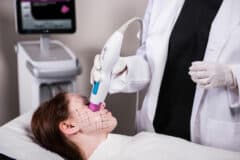
Practitioners performing Hydrafacial should wear full PPE including:
• Fluid Resistant Surgical Mask (FRSM)
• A perspex face shield and or goggles
• Appropriate gloves
• A disposable apron
Client, Equipment and Treatment room
Every client’s skin should be cleaned before a treatment with an anti-viral cleanser. In between client treatments the following should also be carried out wearing a new pair of gloves when cleaning.
• All tubing is rinsed and flushed as normal.
• Handpiece, tubing, lymphatic applicator & LED applicators, face shield & goggles are cleaned, along with all surface with anti-viral cleanser spraying onto a cloth not directly onto device.
• Treatment tips are disposed of along with the couch roll. Surfaces are wiped down and a new couch roll replaces the old one ready for a new customer.
Hydrafacials at Premier Laser
At Premier Laser we will be following Government guidelines for our industry, Hydrafacials recommendations and our own stringent guidelines for all our treatments.
Providing your clinic is adhering strictly to these guidelines the risk of catching Coronavirus is extremely low. Guidelines are only effective if meticulously followed.
That is why you should choose a reputable clinic. A clinic you can trust. A clinic which ensures your safety and wellbeing are paramount.
After the last few months clinics will be happy to welcome you back.
If you have any concerns or questions please contact us.
If you live in London and are thinking about having a Hydrafacial to restore your skin to looking its best after the lockdown, why not speak to us today to find out the nearest clinic to you.




 Back to All Treatments
 In Clinic Consultation
 Telephone Consultation