

What is The Age Limit For Laser Tattoo Removal? - London Premier Laser & Skin Clinic Book Free Consultation

⚡️ EXTRA 10% OFF LASER & SKIN. Use code: FLASH10

00  00:00:00

Location Icon 6 Clinics Across London Users Icon 600,000 Treatments Phone Icon Free Consultation Awards Icon Award Winning Treatments

What is The Age Limit For Laser Tattoo Removal?

By Mary Basiadima, 4 April 2025

What is the age limit for laser tattoo removal?

Tattoos might feel like a forever decision at the time, but tastes change, and so do trends. That’s why laser tattoo removal has become increasingly popular. But one question people often ask is: What is the age limit for laser tattoo removal?

Let’s take a closer look at who can have the procedure, any age-related restrictions, and whether younger or older skin makes a difference to the results.

Is there a legal age requirement?

In the UK, laser tattoo removal is not legally allowed for anyone under the age of 18. This aligns with similar laws around tattooing itself, which is also prohibited for minors. Even with parental consent, reputable clinics will not treat anyone under 18, due to medical and ethical considerations.

The reason is simple: younger skin is still developing, and there may be increased risks of scarring or pigmentation changes. Plus, decisions made at a very young age may not be well thought through, and clinics are expected to act responsibly.

Is there an upper age limit?

On the other end of the scale, there’s no strict upper age limit for laser tattoo removal. In fact, many people in their 40s, 50s and even beyond choose to have tattoos faded or removed for personal or professional reasons.

However, the skin does change as we age. Older skin tends to be thinner and may take slightly longer to heal between sessions. That said, with careful treatment by our experienced practitioners, most clients see excellent results, regardless of age.

Does age affect results?

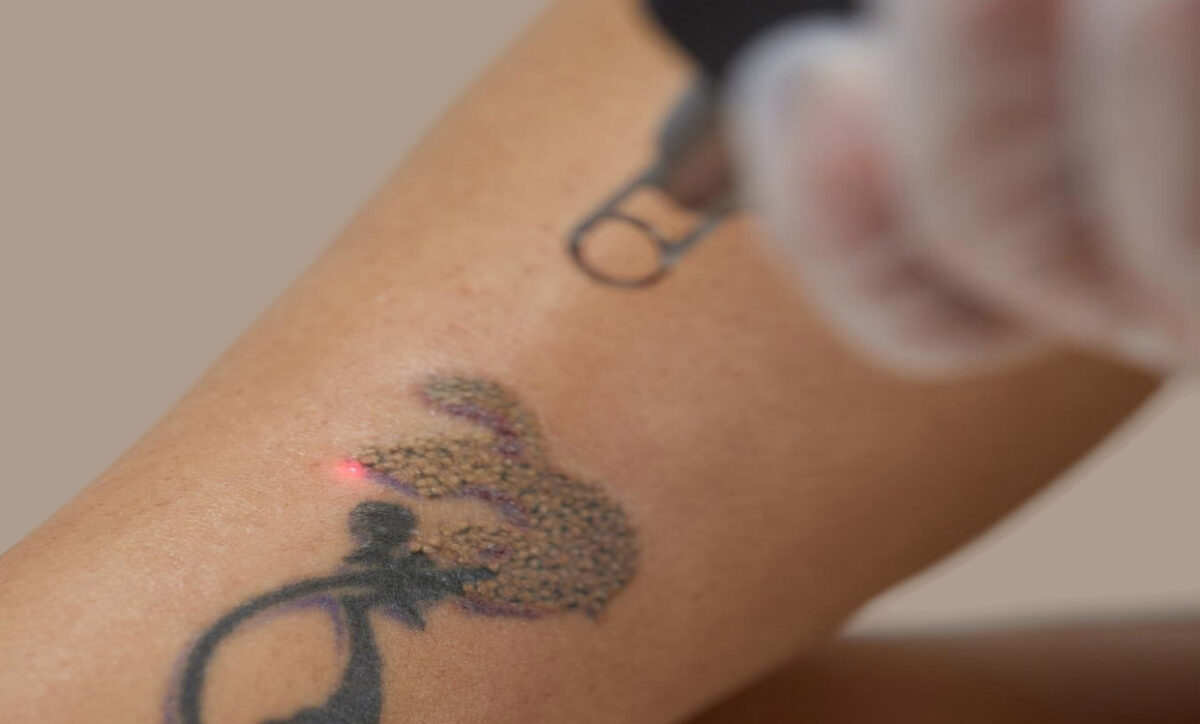
Age can influence how quickly the body processes and clears away ink particles after treatment. Laser removal works by breaking down the pigment so that your immune system can flush it out. Younger bodies may process it a bit faster, but overall health, hydration, and aftercare have a greater impact on results than age alone.

Final thoughts

So, what is the age limit for laser tattoo removal? Legally, you must be over 18 to begin treatment, but there’s no official upper age limit. Whether you’re 25 or 65, what matters most is having healthy skin and realistic expectations. A thorough consultation will help determine whether laser removal is right for you.


FAQs

Can a 15-year-old get laser tattoo removal?

No, laser tattoo removal isn’t usually offered to anyone under 18 in the UK. Even with parental consent, most clinics won’t treat minors due to safety, ethical, and legal considerations. It’s best to wait until you’re at least 18, when you’re legally able to make the decision yourself.

What is the legal age for laser tattoo removal?

There’s no single national law, but many clinics set their own minimum age. Some may treat 16- or 17-year-olds with parental consent, but we prefer to wait until a person is 18. It’s always done case by case, depending on the clinic’s policy.

Who cannot have laser tattoo removal?

Laser tattoo removal isn’t suitable for everyone. It’s usually avoided if you’re pregnant, breastfeeding, have certain skin conditions, are prone to keloid scars, or are on medication that makes your skin extra sensitive to light. A proper consultation is essential to check if it’s right for you.

Popular Categories

Skin Treatments

Special Offers

DR Skincare

Related Articles

Emsculpt Neo + Exilis in London: The Magic of Non-Surgical Body Contouring

Emsculpt Neo + Exilis in London: The Magic of Non-Surgical Body Contouring

When patients think about body contouring, they often focus on just one concern: reducing stubborn fat. However, achieving a sculpted, athletic-looking body involves much more than fat reduction alone. Muscle definition, skin firmness, and body proportions all play an important role in creating visible and natural-looking results. This is why many aesthetic experts now combine…

CoolSculpting vs CoolSculpting Elite: What’s the Difference?

CoolSculpting vs CoolSculpting Elite: What’s the Difference?

If you’re considering non-surgical fat freezing, you’ve probably come across both CoolSculpting and CoolSculpting Elite. While they use the same core science, there are some important differences that can affect your results, treatment time, and overall experience. At London Premier Laser, we offer both treatments and help clients choose the most suitable option based on…

Hyperpigmentation: Causes, Types and the Most Effective Treatments for Clearer, Even-Toned Ski

Hyperpigmentation: Causes, Types and the Most Effective Treatments for Clearer, Even-Toned Ski

Quick Answer: What Is Hyperpigmentation? Hyperpigmentation is a common skin condition that causes patches of skin to appear darker than the surrounding area. It occurs when the skin produces excess melanin, the pigment responsible for skin colour. Hyperpigmentation can appear as: Brown spots Sun spots Age spots Melasma Acne marks Dark patches after skin injury…

HIFU vs Ultherapy vs Sofwave vs Thermage: Which Skin Tightening Treatment Is Right for You?

HIFU vs Ultherapy vs Sofwave vs Thermage: Which Skin Tightening Treatment Is Right for You?

HIFU vs Ultherapy vs Sofwave vs Thermage: Comparison Guide Non-surgical skin tightening treatments have become increasingly popular for lifting and firming the skin without surgery or downtime. With options like HIFU, Ultherapy, Sofwave, and Thermage, it’s not always obvious which treatment is the right fit for your skin concerns or goals. While all four work…

Template: single.php
0