 中文服务
中文服务







 6 Clinics Across London
 600,000 Treatments
 Free Consultation
 Award Winning Treatments
Unwanted hair seems to pop up on a routine basis. In fact, if you’re still shaving, waxing, or plucking, it may feel like it’s never ending. Want to know a secret? That’s because it actually is! Just like the hair on your head, the hair on your body undergoes an almost constant growth cycle that means you’re continually fighting the hair growth again and again. While laser hair removal is almost certainly a way to end it, you may find it helpful to get a closer look at what’s actually going on with your body.
Simultaneous Growth Cycle
All hair follows a standard growth cycle with three different growth phases, all of which occur at once. The phases are anagen, catagen, and telogen.
- During the anagen phase, the hair is growing. It can last from two to six years, and exactly how long it lasts within your body depends a bit on your own genetics. Cells divide to produce new hair fibers, and the follical burrows into your dermal layer.
- During the catagen phase, the melanin production of your hair ends, and the follicle works to renew itself. The phase lasts about two weeks, and the follicle beings to shrink, then rest.
- During the telogen phase, the follicle is actually dormant. The epidermal cells inside continue to grow and reproduce, and they’ll be there when the follicle starts to grow again.
The Effect of Laser Hair Removal
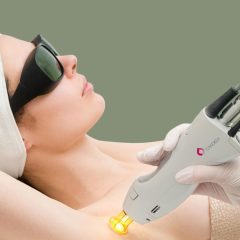
Laser hair removal works to stop that regrowth that might happen as the telogen phases moves into anogen territory once more. The lasers create damage to the follicle, but not the skin around it. That means that it pushes that dormancy for a much longer term solution.
We’re born with hair follicles all over the body. If you’ve ever seen a newborn baby, you’ll immediately notice that fine, soft hair almost everywhere. Because so many people, though, are looking for a few hairless areas, seeking an option like laser hair removal is an absolute must.
To learn more about how we can help, contact us today!











 Back to All Treatments
 In Clinic Consultation
 Telephone Consultation