 中文服务
中文服务







 6 Clinics Across London
 600,000 Treatments
 Free Consultation
 Award Winning Treatments

If you’ve been watching the runways and magazine covers recently, you will have seen models with freckles and other pigmentation conditions. Fashion houses have finally embraced more diverse models recently, which is refreshing and reflective of who their customers are. We’re seeing faces in a gorgeous spectrum of colours, and we’re also seeing more “non-traditional” looks. But let’s examine freckles vs. pigmentation.
While freckles and pigmentation are being embraced in the mainstream, there is often a little confusion about freckles.
Here’s what you need to know when it comes to your freckles
Is hyperpigmentation the same as freckles
Hyperpigmentation, melasma and freckles are skin conditions commonly appearing in both men and women. They occur when melanin is produced in skin cells, which leads to dark-pigmented patches or spots on the skin’s surface.
Freckles are a form of hyperpigmentation. Let’s back up: what is pigmentation? It’s simply the colour of your skin. Our skin (and hair and irises) gets its colour from a pigment called melanin.
Everyone has pigmentation: people who produce more melanin have darker skin and vice-versa.
It’s natural, and the differences just make the world a more beautiful place!
(But no matter what your skin colour, protect yourself from UV rays with SPF!)
There are two types of freckle:
- Ephelides freckles: These appear during exposure to sunlight during summer. They are usually light brown in colour and will fade by winter.
- Lentigine freckles: These are much darker and are more permanent in nature.
Genetics
Here’s where people go astray when it comes to these little spots: they think they’re caused by sun damage. Not so. You can actually thank Mum and dad for them, or chromosome 4q32-q34, to be precise! They’re genetic. They do, however, appear when the skin is exposed to the sun.
 how to get rid of freckles permanently with laser
As mentioned, freckles are a type of hyperpigmentation. People with them produce more than enough melanin, but it does not distribute evenly across the skin. This causes the little localised areas of discolouration, fondly (or not!) known as freckles.
And those with freckles – just like those without – should always wear sun protection. This will help prevent abnormalities from forming. But even with vigilant protection, they’ll still have freckles, thanks to those genes. Laser therapy has proven to be effective for freckle removal.
laser therapy for freckles
If you’re looking to treat your freckles, there are a range of solutions clinics can offer you. Before you think about any laser therapies, the first step is always to get an in-depth diagnosis by a skin specialist.
You can have different types of pigmentation on your body, so it is important to thoroughly analyze your skin before choosing a treatment.
After a diagnosis, treatments could include:
Laser Pigmentation Removal:
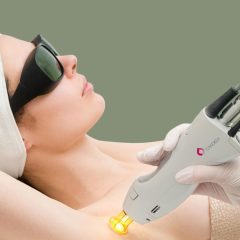
This treatment is quick, easy and painless. A laser is applied to shatter the pigments so your body’s lymphatic system can naturally absorb them.
Pigmentation Peel:
This peel speeds up the skin’s own rejuvenation process while reaching damaged surface layers and providing deep exfoliation. It delivers an even, smooth skin tone.
Revlite freckle removal
RevLite laser treatment refers to the wavelength of light used to target the skin. The pigment in freckles absorbs the laser light. The Revlite, also known as PTP (PhotoAcoustic Technology Pulse), shatters the freckle pigmentation, and the melanin is released to the surface of the skin; it sheds as normal.
 is laser treatment for pigmentation-safe
Laser treatment for pigmentation is generally regarded as a safe and low-risk treatment. Experienced practitioners should always use laser in a reputable clinic or medical practice.
The risk of scarring is low, as are the side effects. As with any cosmetic treatment, you should always talk about your concerns with your practitioner.
how long for freckles to fade after ipl treatment
As the laser light shatters the pigment, it is then naturally absorbed by your body. Your freckles, which have been treated with a laser, may initially get darker in the first 24 hours after treatment and then slowly fade away over the next 1 to 2 weeks.
Are freckles removed permanently?
Results are permanent. If you take care of your skin properly, there should be no recurrence. If you get exposed to too much sun and UV radiation, freckles can reappear.
How effective is freckle removal?
Laser treatments are very effective for treating freckles. Complete removal can be done in one session, although some people may need more than one session.
Freckle removal London
Premier Laser has 9 clinics across London and is London’s leading independent laser specialist. Since 2008, we have performed over 500,000 laser and skin treatments on Londoners. If you live in London and you want to remove freckling, contact us for a free consultation. Your practitioner will recommend the right treatment depending on your skin’s needs.






 Back to All Treatments
 In Clinic Consultation
 Telephone Consultation