 中文服务
中文服务







 6 Clinics Across London
 600,000 Treatments
 Free Consultation
 Award Winning Treatments
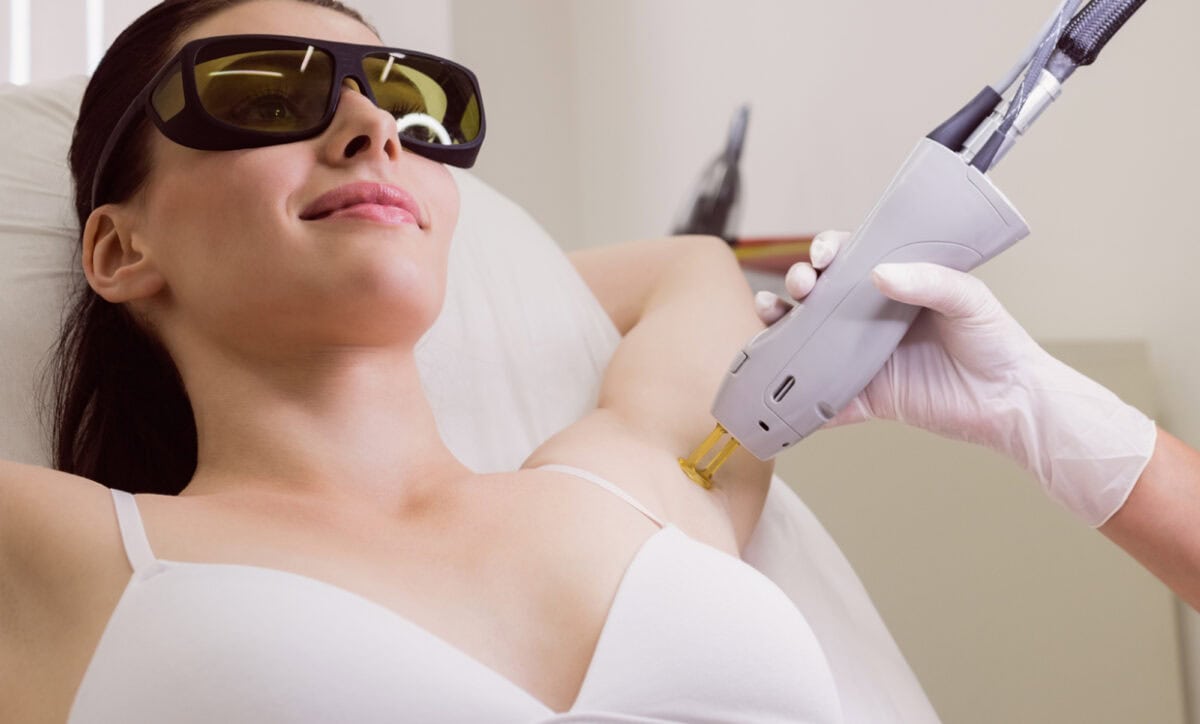
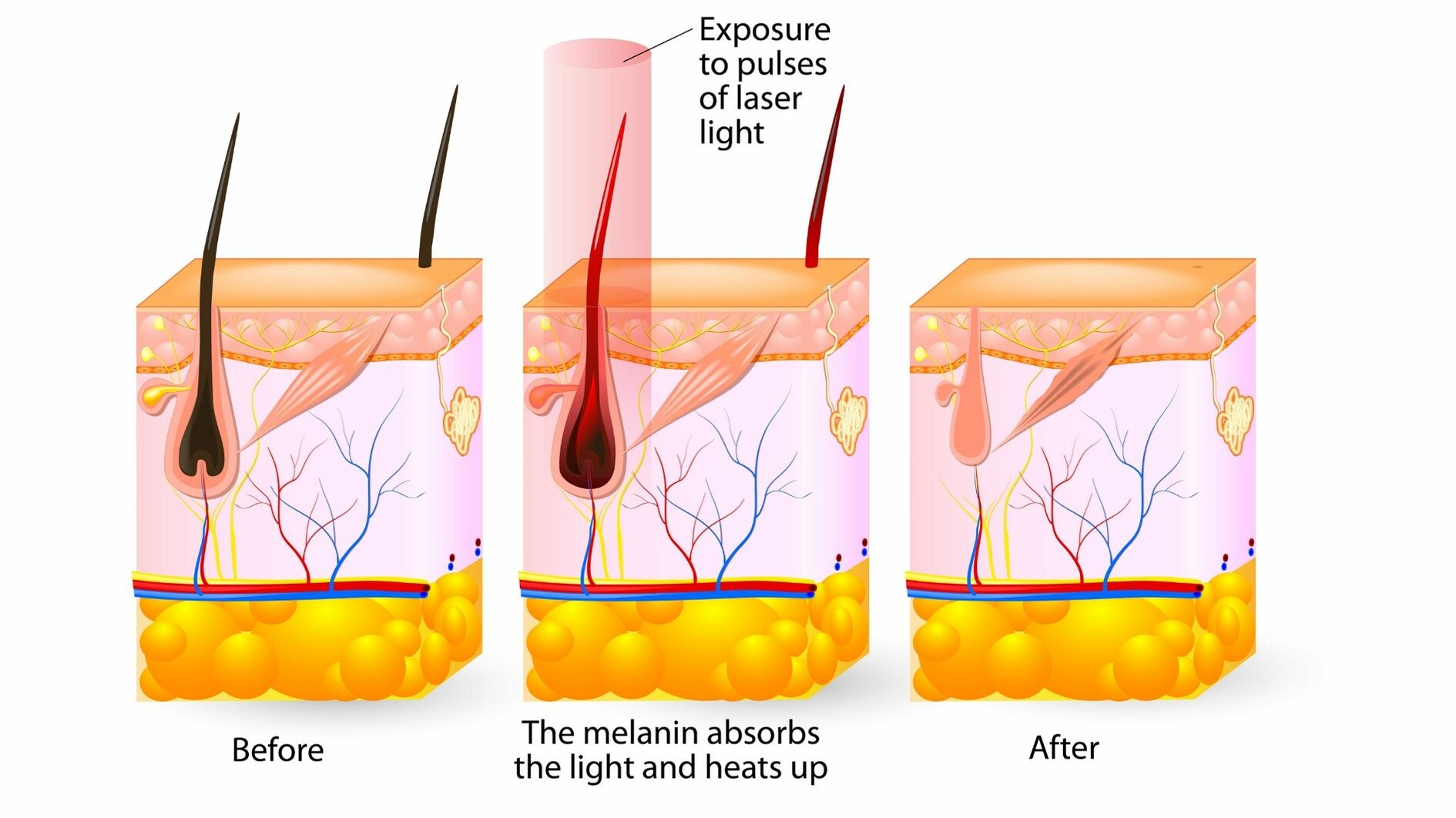
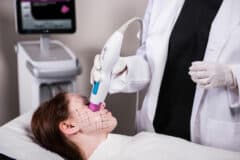
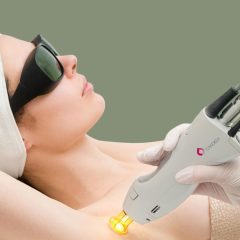
During laser hair removal, a laser releases light that is absorbed by the pigment (melanin) in the layers of skin beneath the hair. This light energy is converted into heat energy, which damages and cauterises the tube-shaped sacs (hair follicles) within the skin responsible for growing hairs. This prevents or slows down future hair growth, resulting in the desired effects of laser hair removal.
What Types of Laser are Used for Laser Hair Removal?
Four types of lasers can be used for laser hair removal. This includes the following:
- Ruby Laser
- Alexandrite
- Diode
- Nd: YAG
How are Lasers Selected?
Different lasers or wavelengths are used for different skin types and tones. The Alexandrite 755nm wavelength is used on lighter skin tones, whereas the Nd: YAG 1064nm is used for laser hair removal dark skin tones. The Ruby laser is fairly old and not used as much these days as the technology has improved since the early days of laser hair removal.
Top-of-the-range lasers like the Candela Gentlemax Pro operate on the 755nm and 1064nm wavelength, so they can treat a wide range of skin types and tones.
Is There Any Pain During Laser Treatment?
Many wonder if laser hair removal is painful. Laser hair removal is a very safe procedure and is virtually painless. In action, the lasers emit a precise beam of light that can then cauterise or destroy the hair follicle so that the strand of hair is safely killed without damaging surrounding tissue or skin. Some people report mild discomfort during the treatment, like an elastic band snapping on the skin.
The skin may be left slightly red after laser treatment, but this returns back to normal within a few hours. This makes it one of the most effective and efficient methods of hair removal to date.
Understanding the Hair Growth Cycle for Effective Laser Hair Removal
In order for laser hair removal to be fully successful, a series of treatments is advisable. This is because laser hair removal works when the hair is in the active growth phase, which 90% of hair usually is. This is also known as the Anagen Phase.
However, to be sure that the full area of skin remains hair-free, the remaining 10% also needs to be treated. This means that some people book in for a series of five, six, seven, or even eight sessions to be completely thorough.
The Hair Growth Cycle
Hair grows in cycles, and each strand of hair undergoes three distinct phases:
Anagen Phase (Active Growth)
This is the phase where the hair actively grows. The cells in the hair root divide rapidly, leading to the formation of new hair. During this phase, the hair follicle is deeply embedded in the skin, making it an optimal target for laser hair removal. The anagen phase varies in duration depending on the body part and individual genetics, lasting anywhere from a few weeks to several years.
Catagen Phase (Transitional)
In this short transitional phase, the hair follicle shrinks, and hair growth slows down. The hair detaches from the blood supply, preparing to shed and make way for new hair growth. The catagen phase typically lasts for a few weeks.
Telogen Phase (Resting/Shedding)
During the telogen phase, the hair follicle remains dormant, and the hair is fully formed but not actively growing. Eventually, the old hair sheds as new hair starts to grow beneath it. This phase can last for several months.
Why is Laser Most Effective During the Anagen Stage?
During the Anagen Stage, melanin is the most concentrated in the skin. This means that more of the light from the laser is absorbed, so hair follicles can be damaged more effectively.
Choose Premier Laser for Laser Hair Removal Treatment
London Premier Laser Clinic is a leading team of beauticians and practitioners who are experienced in achieving perfect skin using laser hair removal London treatments and other skin treatments. Book your free, no-risk consultation today to see how you can get started on your journey to smooth and silky skin!






 Back to All Treatments
 In Clinic Consultation
 Telephone Consultation